

The morning after neck lift surgery, most patients notice the same contradiction: the neck feels tighter, more swollen, and less familiar, while the mirror shows only the earliest stage of the result. That can be unsettling, especially if you expected to look “recovered” after two weeks. In practice, neck lift surgery recovery is a months-long maturation process, not a short event that ends when bruising fades.
Early swelling, numbness, tightness, and unevenness can all occur while the tissues settle. The visible contour may improve before the neck feels natural again, and the final softness and definition can continue developing well beyond the first month. Your surgeon's instructions should always take priority because technique, skin quality, combined procedures, and individual healing can change the schedule.
Table of Contents
- What Neck Lift Surgery Recovery Really Looks Like
- The First Week After Surgery and How to Care for Yourself
- Managing Swelling Bruising Pain and Tightness Safely
- Activity Restrictions and Your Return to Daily Life
- Warning Signs That Need Prompt Medical Attention
- Optimizing Your Results Through Follow Up and Long Term Care
What Neck Lift Surgery Recovery Really Looks Like
On the first morning at home, a patient may be thinking about sleeping upright, moving carefully, managing dressings, and deciding whether the swelling looks normal. The neck can feel firm, tight, or numb. Numbness may make the skin seem disconnected from the deeper tissues. These sensations alone do not predict the final contour.
Neck lift surgery recovery is a months-long maturation process. The first improvement usually comes as incisions begin closing and swelling becomes more manageable. Bruising then fades, movement feels easier, and the contour becomes clearer. Residual firmness, numbness, and muscle tightness can continue easing after the visible bruising has resolved.
A prospective multicenter study of facelift patients found that the average estimate of feeling younger was 6 years at three months, with that assessment remaining stable through six and twelve months (prospective facelift recovery study). The finding supports judging facial and neck rejuvenation across the full healing arc rather than expecting the result to be established during the first couple of weeks.
Why combined procedures change the experience
The amount of surgery affects the recovery pattern. In the same study, 27 of 36 patients, or 75%, had an additional procedure at the time of rhytidectomy. A neck lift performed with a facelift or another facial procedure may bring more swelling, more incision sites to care for, and a longer period before the face and neck look settled.
Judge progress by the direction of change rather than by a single morning in the mirror. Early asymmetry can reflect uneven fluid and tissue swelling. As that fluid resolves and the tissues relax, the neck may become more balanced.
Ice also requires caution. Numb skin has reduced sensation, so direct or prolonged cold can injure the skin without producing an immediate warning. Follow your surgeon's instructions for cooling, dressings, and compression instead of placing an ice pack directly on the neck.
Practical rule: Early tightness reflects healing and tissue support. It does not reliably forecast the final softness of the neck.
Photographs can show the scale of a visual change, as illustrated in this neck lift before-and-after gallery, but they cannot assess your incision, swelling pattern, sensation, or tissue healing. Your surgeon's follow-up remains the appropriate way to distinguish expected maturation from a problem requiring attention.
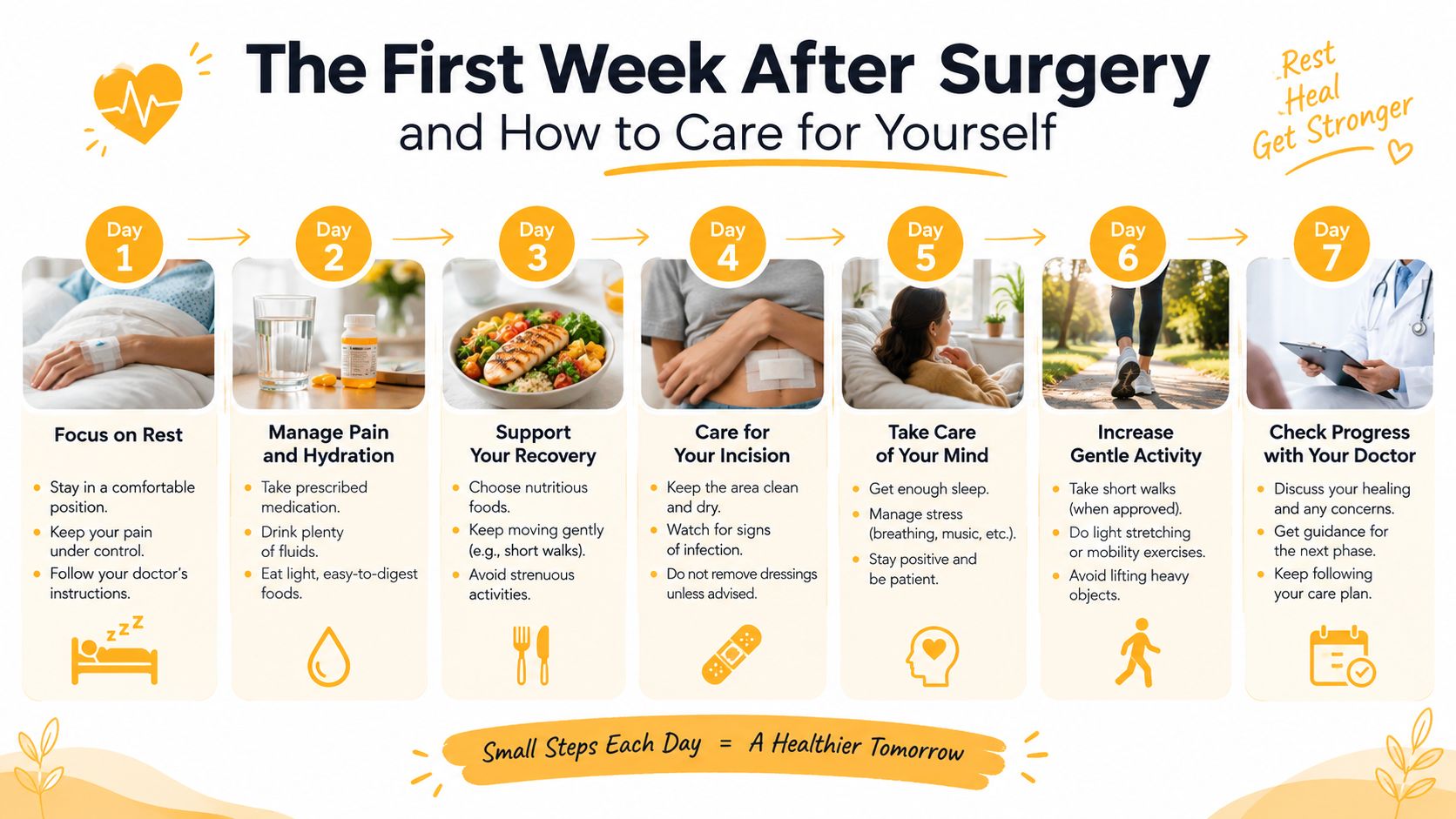
The First Week After Surgery and How to Care for Yourself
Preparation in the first week matters more than endurance. Arrange transportation, have an adult available for the first night, and prepare a recovery space with medications, water, easy meals, button-front clothing, and enough pillows to support your head without forcing the neck forward. These arrangements reduce unnecessary movement while the tissues are vulnerable.
The first 48 hours
Keep your head raised, including during sleep, and avoid bending at the waist or twisting your neck. This position can limit dependent swelling, while sudden bending and straining may increase venous pressure around healing tissues. Take brief, gentle walks around the room when awake. These walks support circulation, not fitness.
Leave dressings, drains, and compression garments in place exactly as directed. If you have a drain, record its output only according to your surgical team's instructions. Do not pull, reposition, or empty it in a way your team has not demonstrated. Incisions behind the ears and beneath the chin also need protection from friction, hair products, and unnecessary touching.
Cold therapy requires particular caution on the neck. Numb skin cannot reliably signal excessive cold, and direct or prolonged icing may injure healing skin. Use only the cooling method your surgeon approves, and never place an ice pack directly on the neck unless specifically instructed.
Days three through seven
Clean the incisions with only the solution and technique prescribed by your surgeon. Avoid rubbing, picking at crusts, applying unapproved ointments, or allowing clothing to catch on wound edges. Showering and hair washing depend on the surgeon's protocol and dressing type, so follow your written instructions rather than a general online schedule.
Gentle walking remains appropriate if you feel steady. Strenuous activity, heavy lifting, vigorous housework, and repeated bending should wait. Guidance on early neck lift care emphasizes head elevation and limiting vigorous exertion, with strenuous activity deferred for roughly 2 to 6 weeks, depending on the operation and the surgeon's assessment (neck rejuvenation complications and aftercare review).
If you need help with meals, transportation, medication pickup, or observation, Care options for homebound patients may help coordinate practical support. Keep the first follow-up appointment even when healing appears routine. Your surgeon can inspect the incisions, assess swelling, adjust dressings, and decide when drains or sutures should be managed.
For a daily framework, review this facelift recovery day-by-day guide. A neck-only procedure and a combined operation can follow different timelines, and visible healing may settle before tightness fully fades.
Managing Swelling Bruising Pain and Tightness Safely
A neck that looks fuller before it looks more defined can still be healing normally. Swelling and bruising reflect tissue manipulation, and the two sides may settle at different rates. Visible swelling may improve while the neck remains firm, numb, or tight. Recovery continues through gradual maturation over the following months, rather than ending when bruising fades.
Why ice requires special caution on the neck
Do not place ice directly on the neck unless your surgeon has specifically instructed you to do so. Guidance from major medical sources warns that excessive cooling can compromise blood flow to healing skin (neck lift recovery guidance). Advice for a bruised knee or ankle does not automatically apply to recently operated neck tissue.

Follow the measures approved by your surgical team. Support your head in an upright, neutral position, limit neck flexion and twisting, walk gently, drink fluids as tolerated, and take prescribed or approved pain medication on schedule. Do not add aspirin, anti-inflammatory medication, supplements, or topical products without checking first, since some can affect bleeding or wound healing.
Combined procedures can produce more swelling and a longer period of firmness than a neck-only operation. Your surgeon's examination matters more than a fixed calendar.
Tightness can outlast the mirror
Pulling beneath the chin, stiffness when turning the head, and a sensation of overly tight skin may continue for several months (neck lift recovery guidance). Tightness should gradually become less intrusive as tissues mature, even after obvious bruising and swelling have settled.
Sleep with your head supported in a neutral position. A tall pillow stack that pushes the chin toward the chest can increase neck flexion, so a reclined position may be more comfortable. Call the surgical team if swelling suddenly increases, becomes distinctly one-sided, or comes with escalating pressure or pain. A small, stable difference early in healing may be observed, but rapid change needs prompt attention.
Activity Restrictions and Your Return to Daily Life
A patient working remotely may return sooner than someone who lifts, bends, drives extensively, or works outdoors. Your procedure, the amount of dissection, job demands, and follow-up examination all shape the plan. Energy can return before the tissues are ready for strain.
Clinical reports show meaningful variation by technique. In a MACS lift series, average return to work was 2 weeks. More invasive extended MACS and deep-plane procedures could leave swelling and bruising unsettled for 3 weeks or longer before social activity felt comfortable (clinical lift procedure report). Some patients after combined neck and face lift surgery resumed normal social activities at around 1 week, sometimes using hair to conceal wounds. That experience does not establish a timetable for every patient or operation.
A practical decision table
| Activity | Typical Timeframe | Key Precaution |
|---|---|---|
| Gentle walking | Early recovery, as approved | Keep the pace easy and stop before fatigue |
| Remote desk work | Often around the second week, if comfortable | Avoid long periods with the head bent forward |
| Driving | Only after surgeon approval and when off impairing medication | You must be able to turn, react, and brake safely |
| Light household tasks | Gradual return as energy allows | Avoid bending, lifting, and repeated reaching |
| In-person social activity | Around one week for selected less invasive cases, longer for extensive surgery | Judge by your actual swelling pattern rather than a calendar date |
| Physically demanding work | Later than desk work | Wait for clearance before lifting or straining |
| Vigorous exercise | Commonly restricted for roughly 2 to 6 weeks, depending on the operation | Increased venous pressure can worsen bleeding and swelling |
Treat the table as a planning aid rather than as clearance. If your work involves lifting or frequent neck movement, arrange additional help and expect a slower transition. Driving requires more than feeling alert. You must be able to turn your head comfortably, respond quickly, and control the vehicle without hesitation.
A gradual return protects the result. Improved energy does not confirm completed tissue healing, so follow the release given by your surgical team even when you feel capable of doing more. Vigorous exercise and straining can increase swelling or bleeding, particularly after more extensive surgery. Check with the team before changing restrictions, especially when several procedures were performed together.
Warning Signs That Need Prompt Medical Attention
Recovery should improve in a steady direction. Contact the surgical team when discomfort intensifies, swelling changes quickly, or one side begins to look different from the other. A symptom that is stable and gradually easing is usually less concerning than a new or rapidly worsening change.
Complications after neck lift surgery are uncommon, but they matter because some require prompt examination or treatment. A pooled analysis reported low rates of hematoma, nerve injury, and sialoma, as well as recurrence of platysma bands (systematic review of neck lift complications).

Call the surgical team promptly if you notice
- Rapid one-sided swelling: Sudden enlargement, increasing pressure, or a tense neck may signal a hematoma. An expanding collection needs immediate surgical assessment rather than observation (neck rejuvenation complications and aftercare review).
- New facial weakness: Report an asymmetric smile, lower-lip weakness, or inability to move part of the face. Temporary nerve weakness can occur, but new asymmetry requires assessment to determine its cause and severity.
- Possible infection: Increasing redness, warmth, drainage, worsening pain, or fever warrants a call. Do not apply an unapproved product and wait for the area to settle.
- Fluid collection: New fullness, soft fluctuation, or fluid near the jaw or beneath the chin may represent a sialoma or another collection. Some resolve with observation and directed care, while others require drainage or further treatment.
- Breathing or swallowing difficulty: Treat either symptom as urgent. Follow your postoperative instructions and seek immediate medical help.
Call when uncertain. A photograph may help the team assess the change remotely, but it cannot replace an examination when swelling is progressing, pain is escalating, or weakness is new. Rapid changes should not be attributed to normal maturation without guidance from the surgical team.
Optimizing Your Results Through Follow Up and Long Term Care
Follow-up is part of the operation, not paperwork. Early appointments let the surgical team inspect incisions and swelling. Later reviews assess contour, scar maturation, numbness, residual tightness, and whether healing is progressing normally. Recovery continues for months after daily activities resume, so a two-week view cannot define the final result.
After the incisions close fully and your surgeon approves, scar care may include gentle massage, silicone-based products, or another individualized approach. Protect healing scars from sunlight. Resume skincare gradually, and do not apply active ingredients to fragile skin without clearance. Good nutrition, hydration, avoiding smoking, and a measured return to exercise support healing, but a changing symptom still requires clinical guidance.
A simple long-term checklist
- Keep every review appointment: Your surgeon can separate expected maturation from a problem needing treatment.
- Protect the incision: Use sun protection and avoid friction while the skin recovers.
- Respect persistent tightness: Tightness may last for months, even after the contour looks settled.
- Delay non-surgical treatments: Restart lasers, injectables, massage, or stronger skincare only after personalized clearance.
- Judge the result gradually: Compare photographs in consistent lighting instead of relying on daily mirror checks.
A neck lift creates durable improvement, while the face and neck continue to age naturally. Longevity depends on tissue characteristics, aging, weight changes, sun exposure, and the operation performed. This guide to how long a neck lift lasts explains why an early postoperative appearance differs from the long-term result.
Chernoff Cosmetic Surgery provides individualized neck lift planning, postoperative instructions, and follow-up care for swelling, tightness, incision healing, and return to activity. Visit Chernoff Cosmetic Surgery to discuss your goals, recovery plan, and consultation with the facial surgery team.