
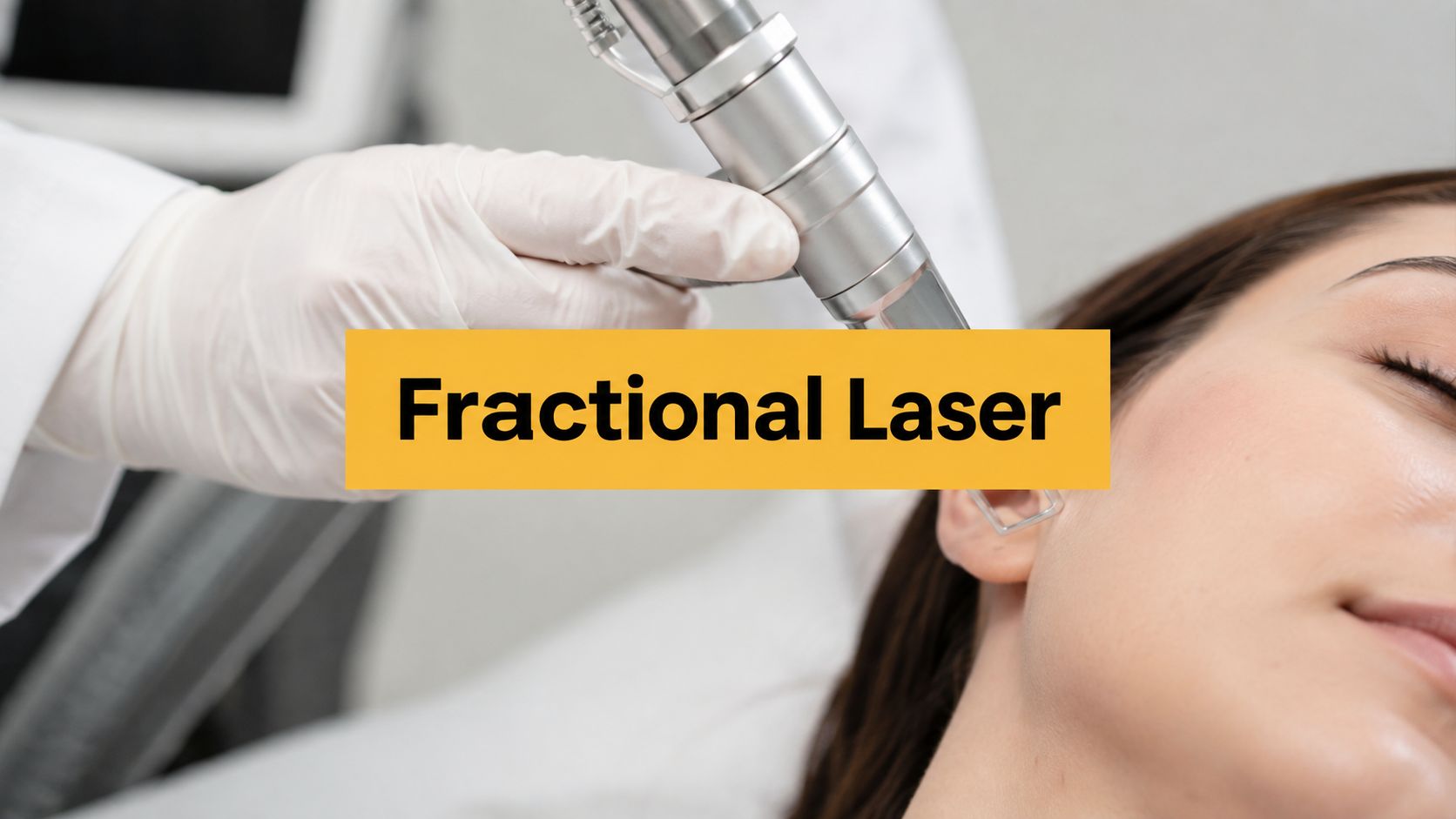
You're standing in front of the mirror, turning your face toward the light, and the same questions keep coming up. Are these acne marks, sun damage, or just texture that skincare can't touch anymore? Fractional laser treatment sits in that exact gap between creams and full resurfacing, which is why it has become such a common conversation in aesthetic clinics.
The attraction is easy to understand. You want real skin renewal, but you don't want the long healing period that older, fully ablative lasers used to mean. Fractional technology changed that by treating only a fraction of the skin at a time, leaving enough healthy tissue around each tiny treatment zone to speed healing. That same design also creates the trade-off that matters most for your results, your downtime, and your pigment risk.
In Santa Rosa, Dr. Gregory Chernoff's practice approaches this topic the way a good consultation should, with skin type, history, and recovery tolerance leading the discussion, not a device name. That patient-first lens matters even more when pigmentation is part of the story, because fractional energy can help some concerns and worsen others if it's used too aggressively.
Table of Contents
- Why People Choose Fractional Laser Treatment
- How Fractional Laser Treatment Works Under the Skin
- Types of Fractional Lasers Compared
- Who Is a Good Candidate and How to Plan Treatment
- The Procedure and Recovery Timeline
- Fractional Laser Compared to Other Resurfacing Options
- Results Timeline, Risks, and What It Really Costs
- Frequently Asked Questions About Fractional Laser Treatment
Why People Choose Fractional Laser Treatment
A patient often reaches this choice after months of looking in the mirror and seeing the same concerns stay put. Acne scars catch the side light, fine lines collect makeup, brown sun spots linger despite careful skincare, and the face starts to look rougher than tired. Peels can feel too surface-level for those problems, while fully ablative resurfacing can feel like too much downtime and too much intensity, so fractional laser treatment becomes the middle path worth understanding.
That middle path is what made the technology gain traction in the early 2000s. Fractional resurfacing treats only part of the skin surface at a time, so the surrounding tissue stays intact and healing can move faster than with older full-field methods. In a 19-month retrospective review of 97 patients who received 101 fractional CO2 laser treatments, 81.1% had full-face resurfacing and 64.3% were treated under local anesthesia without sedation, which shows how the approach had already become part of routine aesthetic practice by the time of that study (PMC review).
What people usually want fixed
The reasons people choose this treatment are usually practical, not cosmetic in the glossy sense. They want smoother texture, softer scarring, a more even tone, and skin that looks healthier rather than obviously altered. Fractional laser tends to enter the conversation after a facial or peel has done as much as it can, but before someone is ready for the downtime and intensity of traditional resurfacing.
Practical rule: if the concern sits below the surface, in texture, scar edges, or collagen loss, fractional resurfacing is more likely to help than a treatment aimed only at the surface.
Skin tone and pigment risk shape the decision just as much as the visible concern. A careful provider asks what bothers you in natural light, how your skin has reacted to heat or inflammation, and whether your background or history makes post-inflammatory pigment more likely. That is the difference between a thoughtful resurfacing plan and a generic brightening promise.
The caution matters because fractional laser is not a one-size-fits-all fix. In melasma, heat and inflammation can sometimes make pigment worse instead of better, so the plan has to be conservative or redirected. Darker Fitzpatrick skin types also need more caution, because the same energy that improves texture can trigger unwanted pigment change if the device choice, settings, or aftercare are not matched to the skin.
Many patients in Chernoff Cosmetic Surgery's practice arrive at this decision after trying topical treatments for months without visible change. Patients with acne scarring often look at fractional laser after other options have plateaued. Patients with sun damage may prefer it when pigment is mixed with roughness. Patients with crepey peri-oral or cheek texture often want a result that feels subtle to other people, but obvious to them when they look in the mirror.
How Fractional Laser Treatment Works Under the Skin
A patient can walk into the office asking for brighter skin and leave with a different conversation entirely. The core question is not just whether a fractional laser can smooth texture, but whether the skin can tolerate the heat, especially if melasma or a darker Fitzpatrick type makes pigment more reactive. That is why the science matters before the settings do.
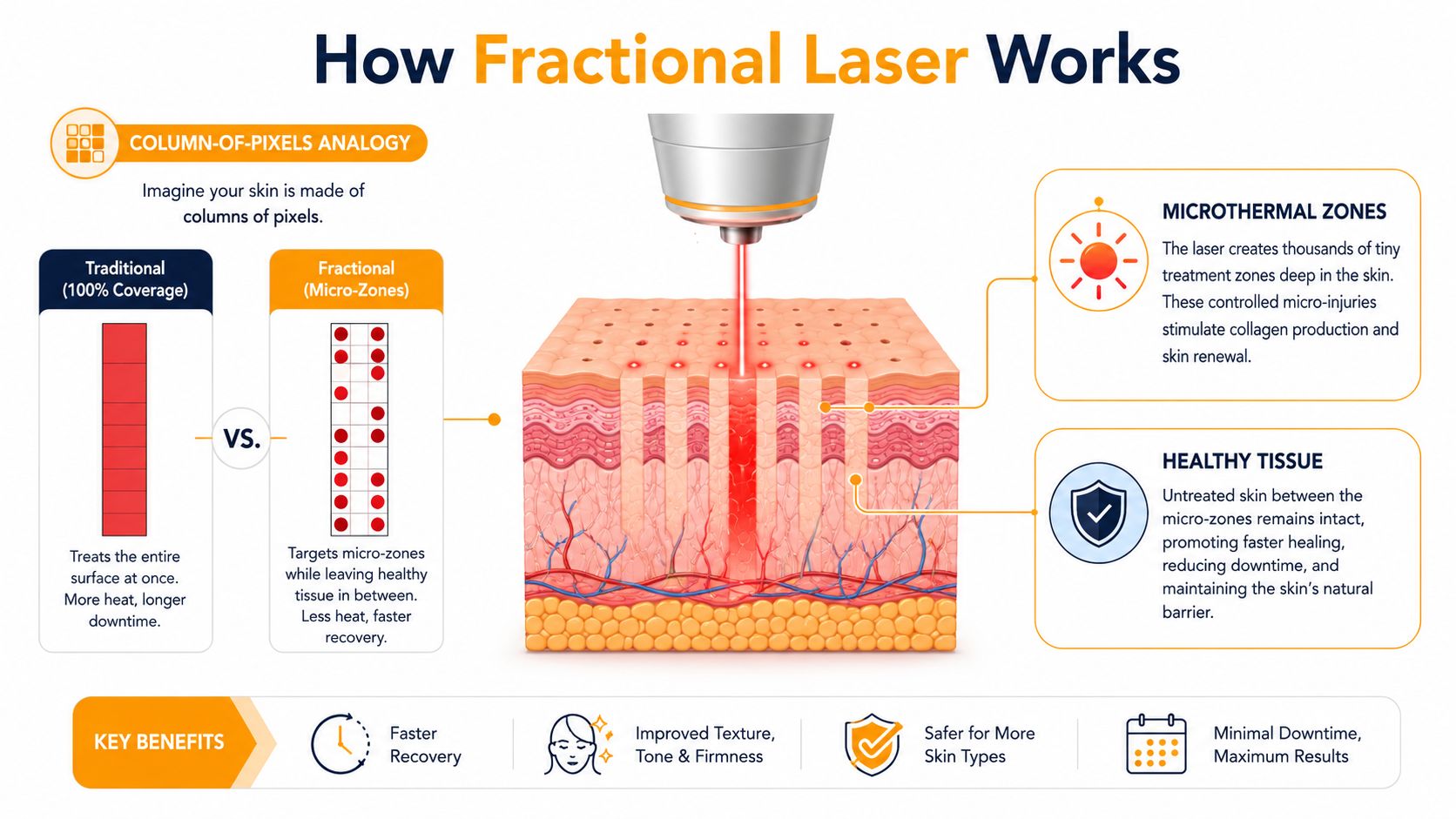
Fractional laser treatment works like a column-of-pixels edit instead of a full-screen wipe. Rather than treating every point of skin in one pass, the device creates a pattern of tiny treatment zones, leaving tissue in between untouched. That intact tissue is what helps the skin close and recover faster, because healing can move outward from healthy islands instead of starting from a fully ablated surface.
These treatment points are called microthermal zones, or MTZs. Dermatology literature describes MTZs as usually covering about 15% to 25% of the treated surface per session, with MTZ diameters around 100 to 160 µm and penetration depth at commonly used facial-rejuvenation energies of about 300 to 700 µm (IJDVL review). That limited coverage is the whole idea. You get controlled injury in a grid, not a blanket burn.
Why the skin remodels instead of just healing
Each microscopic column triggers a repair response. The skin has to close those zones, replace damaged tissue, and lay down new collagen in the months that follow. Early change often shows up as a smoother surface first, then a slower shift in firmness and scar blending later.
Energy and pass count matter because they change how deep and dense those columns are. Higher energy can reach deeper, and stacked passes can increase effect, but both also increase heat burden and recovery time. In plain terms, the clinician is deciding how much of the skin's reserve to use in one session.
For ablative fractional CO2 systems, the technical benchmark is the 10.6 µm wavelength, which is strongly absorbed by tissue water and produces efficient vaporization and coagulation columns in skin. That water absorption is why CO2 can be so effective for resurfacing, as noted in this acne scar laser treatment guide. It is also why settings matter so much. A deeper pass is not automatically better if your skin tone or pigment history makes inflammation more likely.
That trade-off is where people often get confused. The same heat that helps remodel collagen can also stir up post-inflammatory pigment, especially in melasma-prone skin or in darker Fitzpatrick types. A careful plan uses fractional injury to stimulate repair without pushing the skin into a pigment response it cannot calm down from easily.
Types of Fractional Lasers Compared
A patient may hear “fractional laser” as if it described one treatment, but the choice usually comes down to how much heat, depth, and surface disruption the skin can tolerate. The main families are ablative fractional CO2, ablative fractional erbium, and non-ablative fractional devices. They are not interchangeable, because each one balances collagen remodeling, visible downtime, and pigment risk in a different way.
Ablative fractional CO2 sits at the more aggressive end. It is used most often for deeper resurfacing, especially for wrinkles, scars, and folded areas around the mouth and nose. Non-ablative fractional systems stay gentler on the surface and are often chosen for texture or pigment work, especially when downtime needs to stay modest.
Matching wavelength to the skin problem
The wavelength choice matters because it changes both the target and the trade-off. In a review of 730 patients, fractional 1927-nm laser was used in 224 patients, 1550-nm in 334, and fractional CO2 in 172. Across all three, complications occurred in 31 of 730 patients (4.2%), meaning 95% had no complications. The complication rates were 4.0% for 1927 nm, 3.3% for 1550 nm, and 6.4% for CO2, while CO2 gave greater improvement in wrinkles and nasolabial folds and 1927 nm gave the strongest pigmentation improvement (study summary).
| Fractional Laser Types at a Glance | Wavelength | Best For | Typical Downtime |
|---|---|---|---|
| Ablative fractional CO2 | 10.6 µm | Wrinkles, scars, nasolabial folds | Longer than non-ablative |
| Ablative fractional erbium | Er:YAG | More controlled resurfacing with less heat | Usually shorter than CO2 |
| Non-ablative fractional | 1550 nm, 1927 nm | Texture, scars, pigmentation | Usually shorter than ablative |
The 1927-nm wavelength is often discussed for pigmentation because the same dataset showed the strongest pigment improvement in that group. The 1550-nm option is commonly used for texture and scars. CO2 remains the deeper resurfacing tool when the goal is stronger remodeling, but it demands more respect from both the provider and the patient.
Pigment risk changes the choice. In skin that is prone to melasma or post-inflammatory hyperpigmentation, a more aggressive setting can backfire even if the goal is brighter tone. That is why fractional laser treatment is usually planned with skin tone history in mind, not as a one-size-fits-all brightening fix. For a clinical overview of scar-focused planning, acne scar laser treatment guidance gives a useful framing of how these choices are discussed in practice.
Who Is a Good Candidate and How to Plan Treatment
A patient who sees fractional laser treatment as a skin-quality procedure, not a fast brightening fix, is usually the best fit. That often means someone with acne scars, photoaging, fine lines, surgical scars, stretch marks, or mixed tone-and-texture concerns who understands that the treatment changes the surface architecture of the skin and still requires a real healing period.
The more difficult question is who should be treated conservatively, or not pushed into aggressive settings. Active acne can interfere with healing. Recent isotretinoin use, uncontrolled rosacea, pregnancy, and a history of abnormal scarring all shift the discussion toward caution. Pigment history matters too, because a pattern of melasma or post-inflammatory hyperpigmentation changes the risk-benefit balance before a single pass is made.
Clinical reality: darker Fitzpatrick skin types can be treated in some settings, but they need conservative energy, careful pretreatment, and a provider who treats pigment risk as part of the plan, not as an afterthought.
That caution is grounded in what can happen after treatment. DermNet notes that fractional laser can trigger post-inflammatory hyperpigmentation and even rebound worsening of melasma, with safety concerns that are especially important in darker skin types and in patients with melasma history (DermNet). The practical takeaway is simple. If the goal is pigment correction first, aggressive fractional settings can backfire, especially in skin that is already prone to excess pigment.
What a proper consultation should include
A good plan starts with skin type, prior pigment response, and the exact reason the patient wants treatment. Photographs help, and a patch-test or test spot is often wise when the pigment risk is unclear. The consultation should also lay out how many sessions are expected, how much time should separate them, and what prep or maintenance skincare is being used to support healing.
The tone of the plan matters as much as the device choice. If the skin is reactive or pigment-prone, the safest first move is usually a conservative setting that can be assessed before anything stronger is attempted. If the skin tolerates treatment well, settings can be adjusted later, but if redness lingers or pigment starts to flare, the plan should slow down instead of escalating.
Some patients also need help with the practical side of recovery, especially if they worry about remembering instructions or checking in after the visit. A structured follow-up system, like the one described in this Simbie AI post-op workflow guide, can make aftercare more consistent when a practice uses it well.
For patients who are considering deeper resurfacing rather than a lighter pigment-focused approach, a clinic discussion about fractionated CO2 laser treatment planning can help frame the trade-offs before treatment is booked.
The Procedure and Recovery Timeline
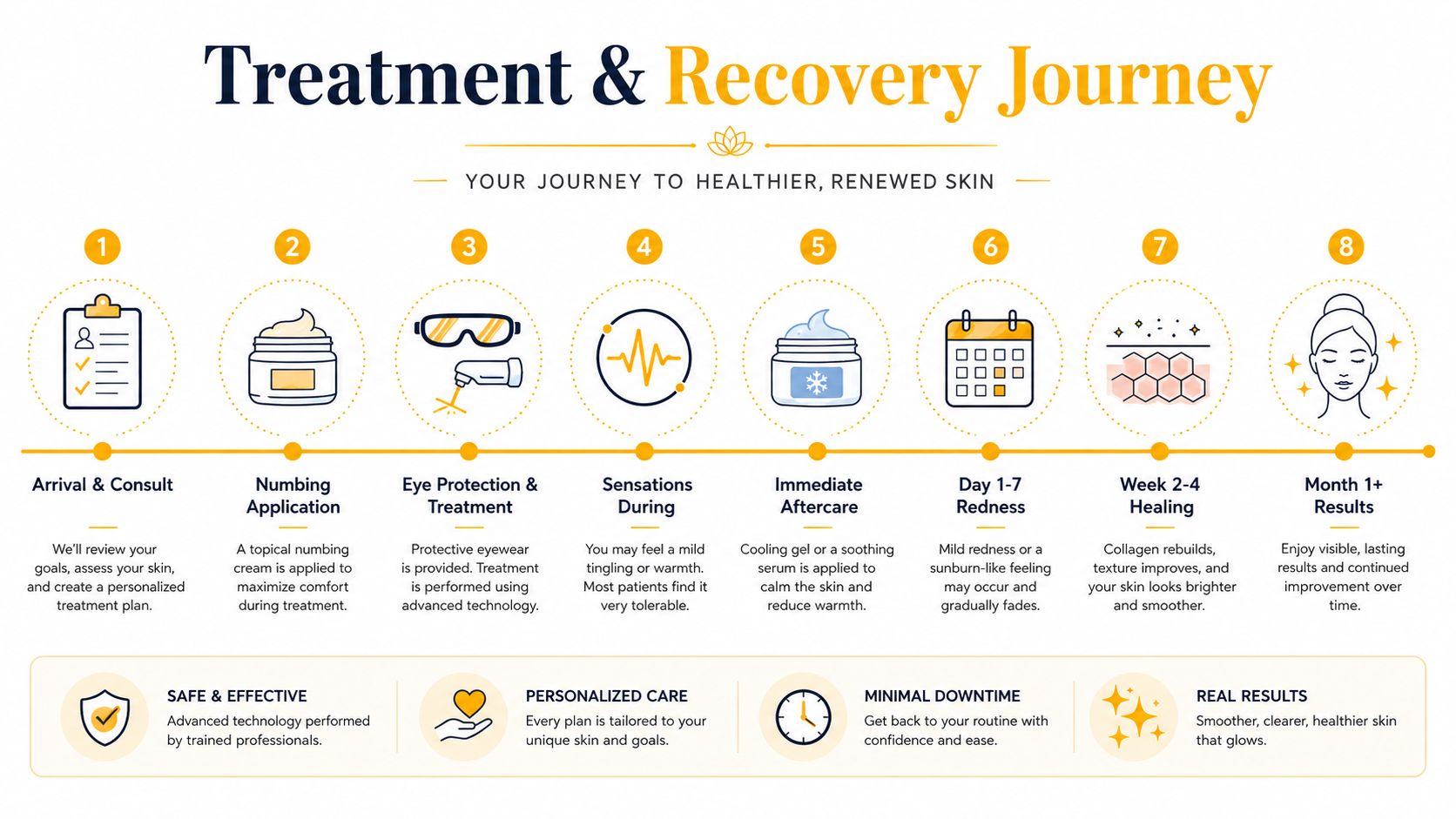
A fractional laser visit usually feels more organized than patients expect. The skin is cleansed, numbing is applied, eye protection goes on, and the provider moves across the treatment area in passes. Some patients use local anesthesia without sedation, which is common enough that it is described in the PMC review of earlier clinical experience.
The sensation is usually described as hot pinpricks, snapping, or a strong wave of warmth that comes and goes. That description fits the way fractional energy is delivered in a grid, because the laser treats tiny columns of skin and leaves the surrounding skin intact, so the feeling arrives in brief pulses rather than as one continuous burn.
What the first month usually feels like
Recovery depends on how ablative the session was, but the pattern is usually familiar. Redness and swelling show up first, then bronzing, flaking, or peeling as the treated columns shed. A clinical review of prior experience found that redness could last longer than the point when the skin starts looking healed, which is why patients with melasma or darker Fitzpatrick types need a slower, more cautious plan than someone seeking a simple brightening effect.
A simple aftercare routine helps the skin settle:
- Use a gentle cleanser that does not sting or foam aggressively.
- Keep the barrier protected with an occlusive moisturizer when directed.
- Wear mineral SPF 30+ every day once the skin is ready for it.
- Pause actives until the provider clears them.
- Sleep with your head propped up if swelling is an issue.
The first week is mostly about avoiding friction, heat, and sun while the surface repairs itself. That matters because the skin can look calm before it has fully recovered underneath, and irritation during that window can turn into longer pigment problems. Patients with a history of melasma or post-inflammatory dark marks need the most caution here, since fractional laser can help texture while still backfiring on pigment if the skin is pushed too hard.
For patients who want a closer look at how follow-up can be organized after treatment, the Simbie AI post-op workflow guide is a useful reference for building consistent check-ins and aftercare reminders.
If you want to see how a fractional CO2 session is framed in a Santa Rosa practice, the fractionated CO2 laser page gives a clinic-specific example of the treatment model.
Fractional Laser Compared to Other Resurfacing Options
Fractional laser is often compared with IPL, chemical peels, and RF microneedling because each one sits somewhere on the same map of “improve skin without surgery.” The mistake is assuming they all work on the same layer. They don't, and that's why one patient loves one treatment while another gets a disappointing result.
IPL is the lightest-touch option for redness and some brown sunspots, with very little downtime, but it doesn't do much for deep scars or true texture change. Chemical peels are useful when the goal is surface brightness or a quick refresh, but they don't remodel collagen the way fractional energy does. RF microneedling treats deeper tissue with heat delivered through needles, which can be attractive for darker skin types because it avoids vaporizing the surface.
A simple decision framework
Use the layer of the problem to choose the tool. If the complaint is mostly color, IPL or a pigment-focused plan may fit better. If the complaint is roughness, etched lines, scars, or crepey texture, fractional laser usually enters the discussion more seriously.
| Treatment | Depth of Effect | Downtime | Skin-Type Safety | Best Use |
|---|---|---|---|---|
| IPL | Superficial color | Minimal | Good for many patients when matched well | Redness, light brown spots |
| Chemical peel | Surface level | Usually limited | Depends on peel depth and skin tone | Brightness, tone refresh |
| RF microneedling | Deeper tissue | Moderate | Often appealing for darker skin types | Texture, tightening, scars |
| Fractional laser | Surface and dermal remodeling | Ranges from modest to more significant | Needs careful pigment screening | Texture, scars, wrinkles, pigmentation |
Ablative fractional laser wins when you need surface renewal and real collagen remodeling together. RF microneedling can be a better first step when pigmentation risk is high, because it can avoid some of the heat-related problems that worry darker skin types. The provider's job is not to push one device, it's to match the injury pattern to the skin's actual problem.
For broader aesthetic planning, a clinic overview like med spa laser treatments shows how resurfacing is usually considered alongside other non-surgical options in a real practice.
Results Timeline, Risks, and What It Really Costs
Results do not arrive all at once. Early glow often appears at 2 to 4 weeks, while collagen-based improvement keeps building for 3 to 6 months. In scar-focused treatment, a literature summary cited earlier reports that many acne-scar patients see about 30% to 70% improvement after fractional CO2 therapy.
The risk list is simple, but it deserves respect. Redness, swelling, temporary dark spots, infection, scarring, hypopigmentation, and melasma flare all belong in the informed-consent conversation, especially when skin tone or pigment history raises the chance of inflammation. Safer plans expect those issues up front and use conservative settings, pigment-aware preparation, and careful aftercare.
What drives the cost conversation
Cost usually depends on the treatment area, the number of sessions, and provider expertise. Scar and photoaging plans often need more than one visit, and the value comes from how long the change lasts after healing settles. Many patients judge the investment by whether the result holds long enough to justify the recovery, especially compared with maintenance treatments that have to be repeated.
Rule of thumb: if the skin concern is structural, not just surface color, the question is how much lasting change the treatment creates for the recovery it asks of you.
Frequently Asked Questions About Fractional Laser Treatment
Is fractional laser safe for darker skin tones? Sometimes, yes, but only with careful screening and conservative settings. Darker Fitzpatrick types need a provider who treats PIH risk as a primary issue, not an afterthought.
Can it make melasma worse? It can. That's why melasma history changes the conversation, and why some aggressive settings are a poor match for pigment-first patients.
Can it be combined with fillers or neurotoxins? Often yes, but timing matters. Many practices separate treatments so the skin can heal cleanly and the full result is easier to read.
How long do results last? The collagen change can be durable, especially when skincare and sun protection stay consistent, but maintenance is still part of the long game.
How do I judge a provider? Ask about skin typing, pigment risk, recovery instructions, and what they'd do if redness or darkening appeared. The device name matters far less than the judgment behind the settings.
If you're weighing fractional laser treatment for scars, texture, or pigment concerns, Chernoff Cosmetic Surgery can walk you through the trade-offs with a skin-type-first consultation and a recovery plan that fits real life. Visit Chernoff Cosmetic Surgery to learn how their team approaches fractional resurfacing, CO2 treatment, and other aesthetic options with careful planning and follow-up.