
You've probably reached the point where skincare products still make your skin feel better, but they no longer change what you see in the mirror. The fine lines around the mouth stay put. Acne scars still catch the light. Sun damage and rough texture make skin look older, even on days when you're well rested.
That's usually when patients in Santa Rosa start looking for something more definitive. Not another cream. Not a temporary glow. A treatment that can resurface damaged skin and stimulate meaningful collagen remodeling.
Fractionated CO2 laser is one of the strongest options for that goal. It's used for concerns like deep wrinkles, scars, sun damage, uneven texture, pores, and even eyelid laxity in a Santa Rosa clinical setting, with treatment intensity ranging from a lighter “LitePeel” to more aggressive resurfacing, as described by Chernoff's overview of fractionated CO2 DOT laser treatment. For the right patient, it can do what topical care and milder treatments often can't.
The hard part isn't just deciding whether the laser works. It's understanding whether it fits your skin, your schedule, your tolerance for downtime, and your long-term goals. That's where most online explanations fall short.
Table of Contents
- Your Path to Renewed Skin Starts Here
- Understanding Fractionated CO2 Laser Technology
- Key Skin Concerns Addressed by CO2 Laser
- Are You a Good Candidate for Treatment
- Your CO2 Laser Journey from Start to Finish
- The Recovery Timeline and What to Expect
- Why Your Choice of Provider in Santa Rosa Matters
- Frequently Asked Questions
Your Path to Renewed Skin Starts Here
A Santa Rosa patient often comes in with a familiar frustration. Makeup starts collecting in lines that used to be easy to hide. Acne scars look sharper in morning light. The skin around the mouth or eyes appears etched in, even on a rested face. Skincare may still help the surface, but it cannot do much for deeper textural change once collagen support has thinned or scar tissue has become more established.
Fractionated CO2 Laser Santa Rosa patients ask about is a resurfacing treatment for that next level of correction. It is designed for people who want meaningful improvement in texture, wrinkles, certain scars, and sun-related skin change, and who understand that stronger results usually come with a more noticeable recovery.
That trade-off matters. Fractional CO2 remains one of the more effective tools we use for structural skin resurfacing, but it is not automatically the right choice for every person or every schedule. According to a 2024 expert consensus published in the Journal of Cosmetic Dermatology and summarized by Aesthetic Management Partners, panelists described a generally favorable patient experience and expected at least moderate improvement, with treatment often planned as a series rather than a one-time event.
In practice, that means consultation matters as much as the laser itself.
A treatment can be clinically effective yet still be the wrong fit for a patient's real-world calendar. Teachers may need to time treatment around school breaks. Winery and hospitality professionals in Santa Rosa often want to avoid visible recovery during event-heavy weekends. Patients with outdoor routines need a realistic plan for sun protection during healing. Good planning protects both the result and the experience.
For patients comparing options, our CO2 laser resurfacing treatment page explains where this procedure fits within a broader facial rejuvenation plan.
The goal at the first visit is simple. Decide what your skin needs, how aggressive treatment should be, and what recovery will ask of you day by day. That is how renewed skin starts with a plan you can follow, not just a procedure you hope will work.
Understanding Fractionated CO2 Laser Technology
Why fractionated matters
The term “fractionated” describes the core mechanism of the treatment. Instead of removing the entire skin surface, the laser creates a grid of microscopic treatment zones across the skin, leaving untreated tissue between them.
That spacing matters in real life, not just in theory. The preserved skin helps the surface close faster, lowers the risk profile compared with older full-field ablative resurfacing, and makes recovery more manageable for patients who want meaningful improvement but still need a recovery plan they can follow.
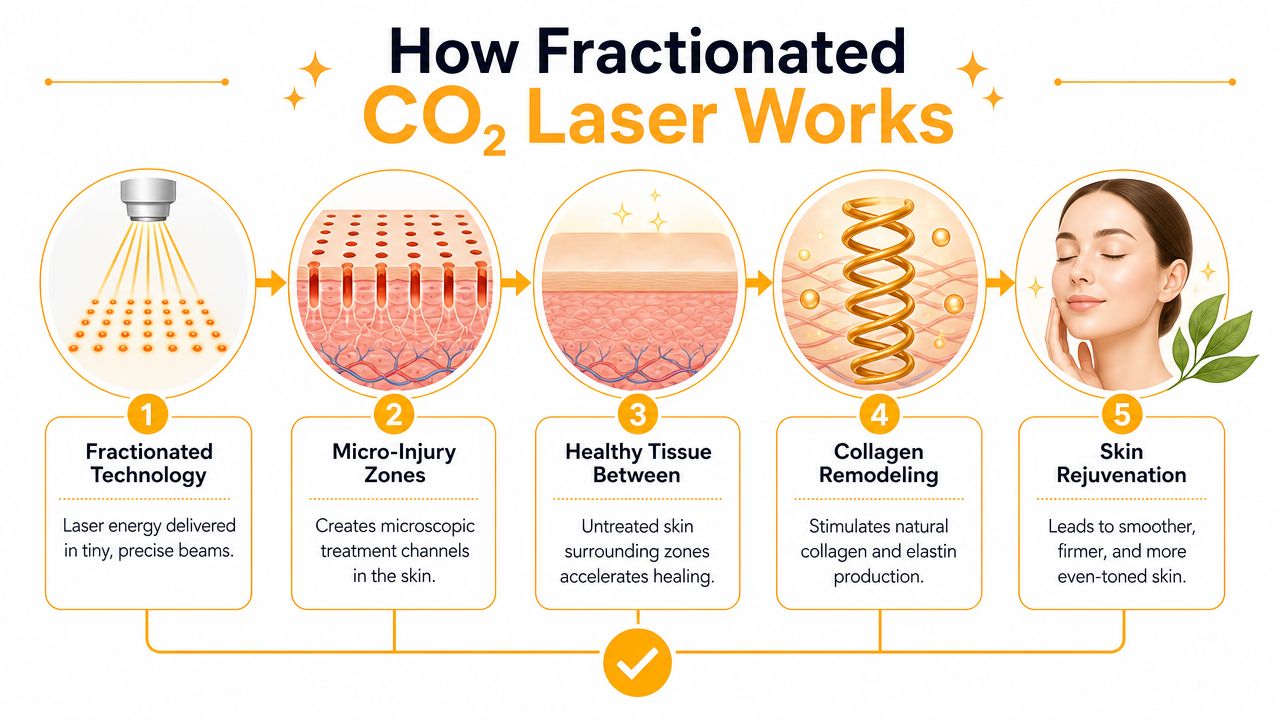
Fractionated CO2 is still an aggressive resurfacing treatment. It works by creating controlled columns of ablation and heat in the skin. Your body then repairs those channels with new epithelial growth at the surface and collagen remodeling deeper down. That is why the treatment can improve texture, lines, and certain scars more effectively than lighter devices, but also why it requires more downtime and more disciplined aftercare.
Patients often hear “laser resurfacing” and assume all lasers work the same way. They do not. Our CO2 laser resurfacing treatment page explains where this approach fits within a broader facial rejuvenation plan, but the key point here is that fractionated CO2 is designed for structural change, not a quick polish.
Why CO2 is so effective
CO2 laser energy is absorbed strongly by water, and skin contains a great deal of water. That lets the laser remove damaged surface tissue with precision while also delivering heat into the dermis. The surface effect improves roughness and visible photodamage. The thermal effect stimulates collagen remodeling, which is the part patients are usually noticing months later when the skin looks firmer, smoother, and more even.
Treatment settings are not one-size-fits-all. The face can often tolerate more intensity than thinner areas such as the neck or chest, and scar treatment may call for a different approach than diffuse facial resurfacing. In practice, the surgeon adjusts energy, density, and coverage pattern based on the thickness of the skin, the problem being treated, the patient's skin type, and how much recovery time is realistic.
That judgment matters.
Higher settings can produce more visible change, but they also increase swelling, oozing, redness, and the risk of prolonged healing or pigment problems. A lighter treatment usually means an easier recovery, but it may not do enough for etched wrinkles or deeper textural damage. Good planning means matching the treatment to the patient, not pushing intensity out of habit.
Key Skin Concerns Addressed by CO2 Laser
A patient may come in saying, "I want smoother skin," but the underlying issue is often more specific. Fine lines around the mouth behave differently than acne scars on the cheeks. Sun damage on the surface is different from crepey lower eyelid skin. Fractionated CO2 is useful because it can be adjusted to match the problem, not because it treats every concern the same way.
Texture and wrinkles
Surface roughness and etched lines usually mean the skin has both visible wear on top and weaker support underneath. That is why patients who feel disappointed by creams, facials, or lighter laser treatments often start looking at CO2 resurfacing. The goal is not just brighter skin for a few weeks. The goal is a smoother surface and stronger collagen support as healing progresses.
This matters most for wrinkles that stay visible at rest. Lines from sun exposure and years of repeated facial movement can become physically set into the skin. In those cases, improving the surface alone is not enough. A properly planned CO2 treatment can soften that etched look more effectively than treatments aimed only at pigment or mild exfoliation.
Pore refinement fits here too. Larger pores are not physically erased, but they often look less obvious when the surrounding skin becomes smoother and firmer.
Scars and structural change
Scars require more judgment than many patients expect.
Atrophic acne scars, such as rolling, boxcar, or some ice-pick patterns, come from lost collagen and tethered tissue. These scars create depressions, shadows, and uneven texture. Fractionated CO2 helps by removing damaged tissue at the surface and heating deeper layers to stimulate remodeling. In some cases, scar release or combination treatment may still be needed because the laser cannot fully correct every tethered scar by itself.
Raised scars are a different problem. Hypertrophic scars contain excess scar tissue rather than tissue loss. Those cases need a more cautious plan because aggressive resurfacing is not always the right answer, especially in patients with a history of abnormal scarring. The consultation should sort out which type of scar is present before treatment is recommended.
Surgical scars and traumatic scars can also improve, but location, thickness, age of the scar, and skin type all affect how far treatment can go.
Sun damage and uneven tone
Sun damage usually shows up as a cluster of changes rather than one isolated complaint. Skin may feel rough, look blotchy, wrinkle more easily, and lose some of its reflective quality. Patients in Santa Rosa often have a long history of outdoor exposure, which means the concern is frequently cumulative texture change, not just a few brown spots.
CO2 can help most when photodamage has created a weathered surface. That includes roughness, fine crinkling, and uneven texture that make the skin look older even before makeup goes on. Pigment can improve as damaged surface layers are replaced, but the main strength of this treatment is resurfacing and remodeling, not acting as a spot corrector for every type of discoloration.
Delicate areas and crepey skin
Some of the most satisfying improvements happen in areas that are hard to treat with skincare alone. Crepey skin near the eyes or around the mouth can make the whole face look tired, even when volume loss is not severe. Fractionated CO2 is often considered here because these thin-skinned areas tend to show textural aging early.
That said, thin skin also needs restraint. Eyelid and perioral treatments can produce excellent improvement, but they require careful settings and realistic expectations about healing time, swelling, and temporary redness. The strongest treatment is not automatically the best treatment. The right treatment is the one that improves the concern without creating a recovery burden the patient was not prepared for.
A practical summary:
- Etched wrinkles: best for lines that remain visible even when the face is at rest
- Atrophic acne scars: helps remodel uneven texture and soften depressed scars
- Photodamage: improves rough, weathered skin with mixed texture and mild pigment irregularity
- Crepey skin: can tighten and smooth thin areas when settings are chosen carefully
The common thread is depth of change. Patients usually choose fractionated CO2 when the problem is not just dull skin, but skin that looks structurally aged, scarred, or persistently uneven.
Are You a Good Candidate for Treatment
The best candidate isn't necessarily the person who wants the biggest change. The best candidate is the person whose skin concerns, skin biology, and recovery tolerance line up well with an ablative resurfacing procedure.
Who tends to do well
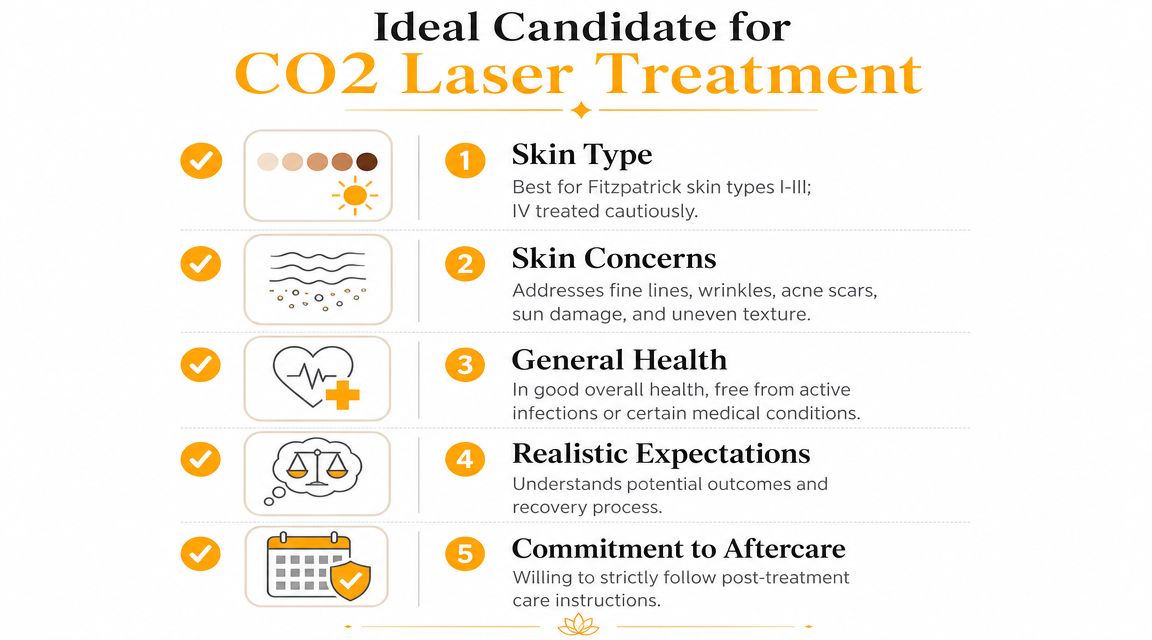
Patients often do well when they have concerns such as visible wrinkles, acne scars, textural sun damage, or crepey skin that hasn't responded to less intensive options. Good candidates also understand that the treatment involves healing time and careful aftercare.
A strong consultation usually looks at more than the obvious complaint. It should review your pigmentation history, whether you scar easily, whether you've had cold sores, how reactive your skin is, and how much downtime you can realistically manage.
Good candidacy often includes these traits:
- Clear treatment goals: you want improvement in texture, wrinkles, scarring, or sun damage, not just a temporary glow.
- Reasonable expectations: you understand this can create significant improvement, but it won't make skin behave like it did decades earlier.
- Commitment to aftercare: you're willing to protect healing skin, avoid picking, and follow instructions closely.
When caution matters more than enthusiasm
Fractionated CO2 is still an ablative procedure. That means safety and risk stratification matter. A major gap on many local treatment pages is the lack of direct discussion about pigmentation risk and healing complications.
Known risks include redness, infection, cold-sore reactivation, and post-inflammatory hyperpigmentation. Independent expert commentary also notes that downtime and side effects vary by patient, and specifically highlights pigmentation risk during healing as a major concern in candidate selection, as discussed in this expert video commentary on CO2 laser healing and pigmentation risk.
Clinical judgment matters most when a treatment is powerful enough to cause both improvement and complications.
That's why some patients need modified settings, pretreatment planning, or a different procedure entirely. If your skin has a history of problematic pigmentation, if you have an active infection or irritation in the treatment area, or if your schedule won't allow proper recovery, a good provider should say so plainly.
The right answer isn't always “yes.” Sometimes it's “yes, but with a lighter protocol.” Sometimes it's “not yet.” And sometimes another treatment is safer for your skin type and goals.
Your CO2 Laser Journey from Start to Finish
Most anxiety about laser resurfacing comes from not knowing what the process looks like. Once patients understand the sequence, it becomes much easier to prepare.
Before treatment day
The process starts with consultation and skin assessment. That visit should cover your concerns, your history of pigmentation issues or cold sores, your tolerance for downtime, and whether your goals are better served by a lighter or stronger resurfacing approach.
Before treatment, patients are usually asked to simplify skincare and avoid things that can leave skin irritated going in. Sun exposure is also a problem because recently tanned or inflamed skin is not ideal for an ablative laser procedure.
What treatment day feels like
On treatment day, the skin is cleansed and prepared. A numbing approach is typically used for comfort, and the exact steps depend on the treatment intensity and area being resurfaced.
During the procedure, patients often describe heat and a prickling or pins-and-needles sensation. The experience is tolerable for many people, but it still feels like a real procedure, not a relaxing facial. The intensity depends on the settings, the area treated, and how aggressive the plan is.
Afterward, the skin usually looks quite red and feels warm. Many patients compare the sensation to a strong sunburn at first. Before leaving, you should have a clear written plan covering cleansing, ointment use, sun avoidance, warning signs, and who to contact if healing doesn't look right.
A good treatment day ends with clarity, not confusion. You should know how your skin will likely look tonight, tomorrow, and over the next several days, plus what's normal and what isn't.
The Recovery Timeline and What to Expect
A realistic recovery plan matters as much as the treatment itself. Many Santa Rosa patients are less worried about whether fractional CO2 can improve the skin and more concerned about what they will look like on day three, when they can be seen in public again, and how long the pinkness will last.
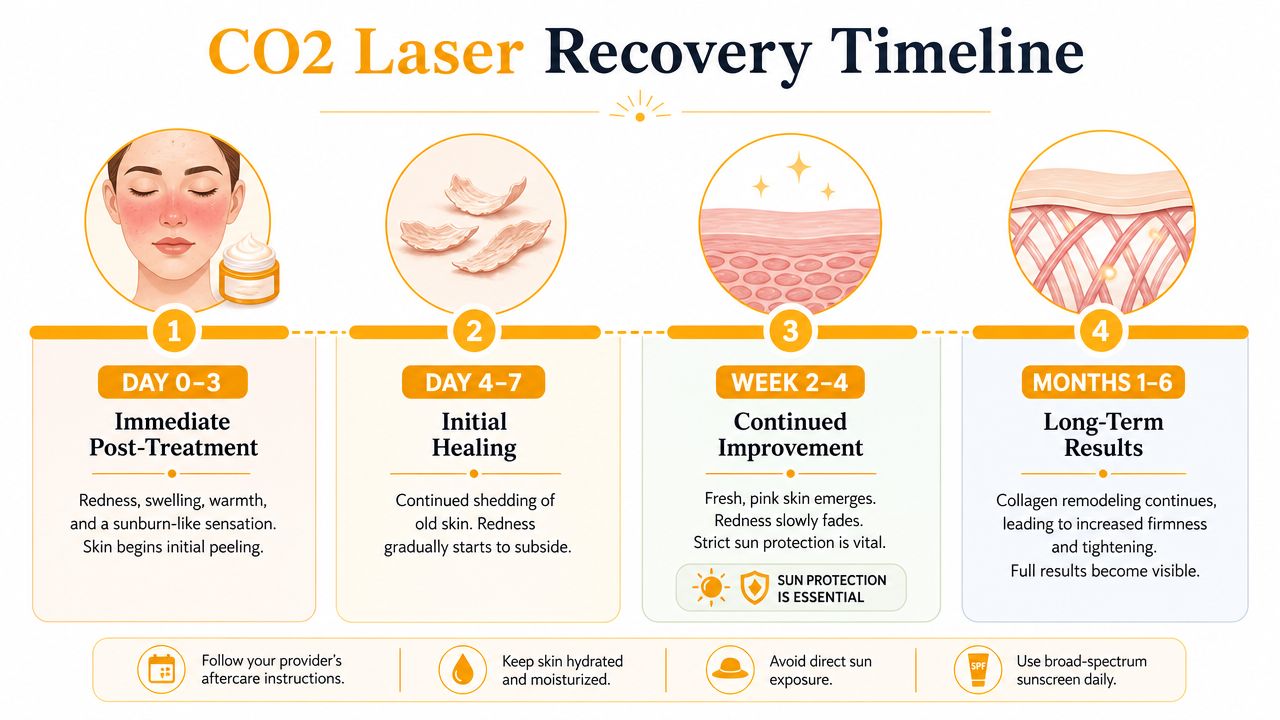
Recovery from fractional ablative CO2 usually involves about 5 to 7 days of more visible healing, with redness that can persist longer, according to this review of fractional ablative CO2 resurfacing and practical recovery trade-offs. The exact course depends on treatment depth, the area treated, your skin biology, and how closely you follow aftercare.
What healing usually looks like
The first 72 hours are usually the most noticeable. Skin often feels hot, tight, swollen, and tender, similar to a significant sunburn. By day two or three, many patients start asking whether the skin looks worse before it looks better. That concern is common, because the surface can appear redder, rougher, and more inflamed before the old damaged layer begins to lift.
Around days four through seven, the skin often takes on a bronzed, sandpapery, or flaky look. This stage can be socially inconvenient even when discomfort is improving. Makeup is not always appropriate right away, and trying to speed peeling by rubbing or scrubbing tends to set healing back.
By the end of the first week, many patients are through the heaviest peeling. Pinkness can remain for several more weeks, especially after a stronger treatment. That lingering color does not mean something is wrong. It usually reflects ongoing skin remodeling.
| Timeframe | What to Expect |
|---|---|
| Day 0 to 3 | Redness, warmth, swelling, tightness, and a strong sunburn-like sensation are common. Some swelling is more noticeable in the morning. |
| Day 4 to 7 | Peeling, flaking, bronzing, and surface shedding become more obvious. The skin often looks dry and rough before it looks smoother. |
| Week 2 to 4 | Pinkness gradually settles. Skin texture usually looks improved, but it still needs gentle care, sunscreen, and patience. |
| Longer term | Smoother texture, softening of lines, and collagen-related improvement continue to develop over time. |
Results also build gradually. Some patients see an early glow once the surface heals, but the more meaningful textural improvement develops later as collagen remodeling continues. If a staged plan is chosen, more than one session may be recommended, as noted earlier, but the right number depends on how much correction you want and how much downtime you are willing to accept.
For patients who like to see a practical walkthrough, this short video offers another look at recovery expectations:
Recovery habits that help
Good healing is usually simple, but it does require discipline.
- Clean gently: use only the cleanser or cleansing method your treatment team recommends.
- Keep the skin protected and moist: the barrier is temporarily disrupted, so bland healing ointments or approved recovery products are usually more helpful than active skincare.
- Avoid sun and heat exposure: fresh laser-treated skin is more prone to prolonged redness and post-inflammatory pigmentation.
- Do not pick, peel, or exfoliate: forcing skin off can increase irritation and delay recovery.
- Pause retinoids, acids, and scrubs until cleared: treated skin needs time before stronger products are reintroduced.
Patients often ask about comfort measures during the irritated phase. General references on aloe vera for irritated skin can be useful for background, but after CO2 laser, only use products your provider has specifically approved for post-procedure skin.
If your aftercare plan includes a supportive mask, this guide on how to get the most out of your CO2Lift mask explains how some practices support the skin during recovery.
Healing rarely improves in a perfectly straight line. Week to week is the better way to judge progress.
Why Your Choice of Provider in Santa Rosa Matters
Fractionated CO2 can produce meaningful change, but the technology itself isn't the whole story. Outcomes depend on who chooses the settings, who evaluates your skin type, and who knows when not to push treatment too aggressively.
The same device can be used lightly or with more intensity. It can be a smart choice for one patient and a poor one for another. Good results come from judgment, not from using a powerful laser on everyone the same way.
For patients comparing options locally, it helps to choose a practice where resurfacing is part of a larger facial rejuvenation framework rather than treated as an isolated menu item. A consultation with a qualified cosmetic surgeon should weigh laser resurfacing against alternatives, combination plans, and the realities of your schedule and skin history. For local practice information, you can review this page about a Santa Rosa cosmetic surgeon.
If you're planning treatment around work, family visits, or local downtime, it can also help to think ahead about your social calendar. This guide to best Santa Rosa activities 2026 is a practical reminder to schedule resurfacing when you don't mind a quieter week at home.
Frequently Asked Questions
Does fractionated CO2 laser hurt?
It's not painless, but most patients describe it as manageable with proper numbing and preparation. The stronger the treatment, the more intense it tends to feel both during the procedure and in the first part of recovery.
How many treatments will I need?
That depends on your concern, your skin response, and how aggressive each session is. For maximal results, a 2024 expert consensus recommended 2 to 4 sessions spaced 6 to 8 weeks apart, as noted earlier in the article.
Is it better than non-ablative lasers or RF microneedling?
Not automatically. It's usually the better fit when texture, etched wrinkles, and acne scarring need more than a mild collagen boost. If your aging changes are mild and you want less downtime, a less aggressive option may make more sense.
When will I see results?
You'll usually notice surface improvement once the early healing phase settles down, but final refinement takes longer. The skin continues to remodel over time, so results don't appear all at once.
Can it treat the eye area?
In some cases, yes. Fractionated CO2 is used in a Santa Rosa clinical setting for eyelid laxity as well as wrinkles and texture concerns, but the eye area requires careful technique and appropriate patient selection.
Who shouldn't rush into treatment?
Anyone with a strong history of pigmentation problems, active irritation or infection, or unrealistic expectations should slow down and get a careful evaluation first. This is a treatment where candidacy matters just as much as the laser itself.
How much does it cost?
Cost varies by treatment area, intensity, and whether you need a series. The right way to compare value isn't by chasing the lowest price. It's by understanding what level of treatment you're getting, how experienced the provider is, and what support you'll have during recovery.
If you're considering Chernoff Cosmetic Surgery for fractionated CO2 laser treatment in Santa Rosa, the next step is a consultation focused on your skin type, your goals, and the level of resurfacing that fits your life. The right plan should be specific, candid about recovery, and built around safe improvement rather than generic promises.