
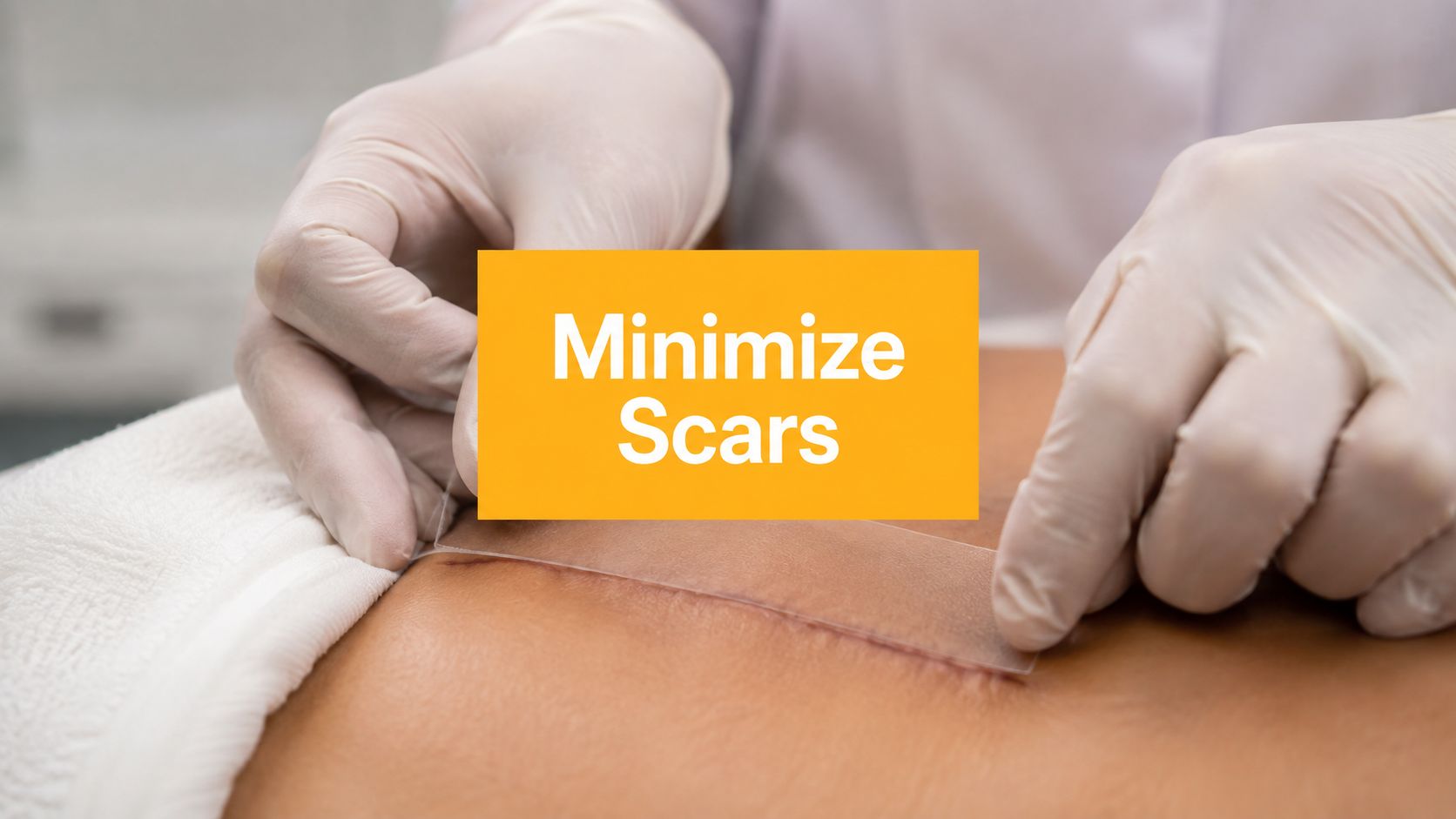
Approximately 100 million people develop scars after trauma or elective surgery every year in middle-income countries, and about 15% require surgical intervention because of cosmetic concerns or functional impairment, according to an NIH-hosted review (clinical review of scar prevention and management). That scale changes the conversation. Scarring isn't a minor afterthought reserved for cosmetic procedures. It can affect movement, comfort, confidence, and future treatment decisions.
The practical answer to how to minimize scarring isn't a miracle cream. It's a staged plan that begins before the incision, protects the wound while it gains strength, introduces silicone only when the skin has closed, and escalates to professional treatment when a scar becomes raised, tethered, unusually red, painful, or resistant to home care. Timing and consistency matter more than collecting products.
Table of Contents
- Why Scar Prevention Requires a Staged Approach
- Preoperative Planning and Risk Assessment
- Immediate Wound Care and Tension Reduction
- Silicone Therapy for Scar Prevention and Treatment
- Advanced In-Office Interventions for Stubborn Scars
- Healing Timeline and When to Consult a Specialist
Why Scar Prevention Requires a Staged Approach
A scar develops as the body repairs injured tissue. The result can become too thick, wide, dark, or stiff when the wound is exposed to tension, inflammation, infection, or an individual tendency toward abnormal healing. Preventive measures include careful suture technique, taping, silicone therapy, and corticosteroid injections, with silicone used as a first-line option for preventing hypertrophic scars, as described in the evidence review on scar prevention.
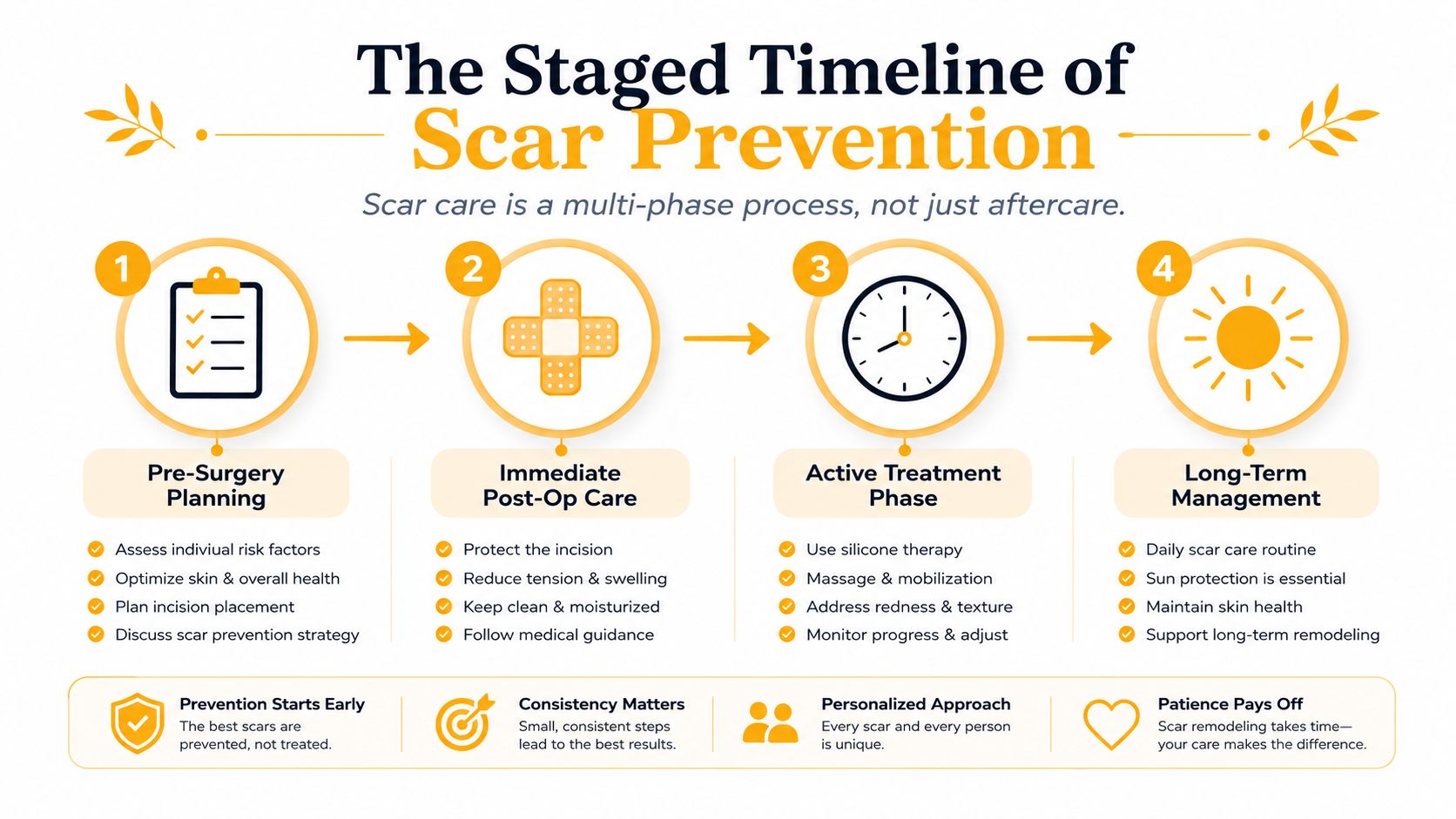
Scar management works best when treatment matches the healing stage. Before surgery, you and your surgeon assess risk and plan the incision and closure. Immediately afterward, wound protection and tension control take priority. After the incision has fully epithelialized, silicone and selected taping can support the developing scar. Later, laser treatment, injections, microneedling, or revision may be considered if the scar remains raised, indented, discolored, or restrictive.
Practical rule: Identify a high-risk scar early, while more treatment options remain available.
An aggressive plan is not appropriate for every patient. Early review still matters because normal redness and firmness can resemble the first signs of hypertrophic or keloid behavior. Over-the-counter products have limited value if the wound is open, infected, or under substantial mechanical stress, and they cannot replace professional assessment when a scar is worsening.
For injuries outside surgery, a structured guide to the best burn aftercare routine can help organize early protection and follow-up. Silicone-based care remains a standard prevention and treatment option, but the broader lesson is more important: scar minimization is a sequence, not a single purchase.
Preoperative Planning and Risk Assessment
Scar management begins before the operation. During consultation, discuss incision placement, the amount of tension the area may experience, closure methods, and the follow-up plan if the scar becomes raised or firm. These choices determine which interventions can be used later and when they should start.
Risk assessment deserves a direct conversation. Abnormal scarring is associated with younger age, higher BMI, wound tension, infection, and a personal history of keloids. Stronger associations have been reported in Black or African American patients and in people with rosacea, atopic dermatitis, scarring alopecia, or acne, according to a review of risk factors for abnormal scarring. This does not predict an individual outcome, but it identifies patients who may need closer review.
Questions to settle before the procedure
Bring a clear history to the consultation. Mention scars that became raised or extended beyond the original wound, delayed healing, infections, skin conditions, allergies, and all medications or supplements. An old scar can change the prevention plan, particularly if it was a keloid.
Ask how the incision will follow, or depart from, natural skin tension lines. Clarify which movements may pull on the closure and when normal activity can resume. You should also know whom to contact if redness, drainage, wound separation, or unusual firmness develops.
Nutrition and medication review belong in the same discussion. Your surgeon may recommend adjustments based on your health, the procedure, and your prior healing. Do not change prescribed medication independently or begin supplements solely because a product claims to improve scars.
Surgical technique sets the foundation
Gentle tissue handling, precise closure, suitable suture selection, and infection prevention all influence the scar. An incision may fit within a crease or follow a lower-tension line, but anatomy and surgical safety come first. A hidden incision is not a better trade-off if it increases pulling during healing or compromises the procedure.
A good preoperative scar plan includes a response strategy, not just a list of products.
Patients with keloids or other risk factors should ask whether their surgeon recommends a planned sequence of early silicone, prolonged taping, pressure therapy, injections, or specialist review. The timing is individualized. Risk assessment cannot guarantee an invisible scar, but it can identify warning signs sooner and preserve more options if the scar begins to thicken.
Immediate Wound Care and Tension Reduction
The first 6 to 12 weeks deserve focused mechanical protection. Stress across a healing wound can contribute to early scar widening and hypertrophy, even when the surface appears closed (guidance on tension reduction and scar management). Deeper tissue remains vulnerable to pulling, twisting, swelling, and repeated friction.
Follow your surgeon's dressing instructions precisely. Clean only as directed, pat the area dry, and avoid soaking until you receive clearance. Keep hands, clothing, and adhesive products from irritating the closure. Increasing drainage, separation, spreading redness, worsening pain, or fever warrants a call to your surgical team. Scar products cannot correct an infection or a wound problem.
Protect the closure from everyday force
Steri-Strips or other medical tape may reduce direct tension at selected sites after your surgeon confirms that the wound and skin can tolerate them. High-tension areas may require prolonged taping, but adhesive choice, placement, replacement, and duration depend on the incision. Remove tape slowly and gently. Repeatedly stripping fragile skin can cause irritation and reduce adherence.
Activity modification matters just as much. Avoid movements that stretch the incision, heavy exertion that increases pulling, and clothing that rubs the closure. Follow procedure-specific restrictions rather than generic recovery advice, because incision location and surgical design change the risk. Suture removal also requires accurate timing. Early removal may permit widening, while prolonged retention can produce track marks or irritation.
For procedure-specific instructions, review this guidance on postoperative care and incision protection, then reconcile it with your own written plan and surgeon's directions.
Compression has a narrow role
Pressure therapy is reserved for selected patients, particularly those with high-risk scars or wounds exposed to substantial tension. Protocol discussions describe pressure at 15 to 40 mmHg for 23 hours per day for about 6 months, paired with silicone dressing for at least 12 hours daily for 2 months, beginning roughly 2 weeks after surgery. These parameters come from selected protocols, not universal instructions. Excessive pressure can injure skin, reduce comfort, and make adherence unrealistic.
Sequence matters. Protect the closure first, add taping when appropriate, and introduce silicone only after the surface has fully healed, as outlined in the same protocol discussion. Laser treatment or injections belong later, when a scar shows persistent redness, thickening, or symptoms despite appropriate early care.
A common mistake is stopping protection once the incision looks acceptable. Remodeling continues after apparent closure, so ask when taping or compression should end instead of relying on appearance alone.
Silicone Therapy for Scar Prevention and Treatment
Silicone has the strongest support among noninvasive interventions for fresh surgical wounds. A meta-analysis found that topical silicone gel improved pigmentation, scar height, and pliability compared with placebo or no treatment. The reported standardized mean differences were -0.55, -0.73, and -0.49, respectively, with statistically significant results (meta-analysis of topical silicone gel).
Pooled trials also found that silicone sheeting lowered the risk of hypertrophic scars compared with placebo, with a relative risk of 0.70 across 856 scars. Another pooled analysis of hypertrophic scars and keloids reported a relative risk of 0.41. These findings support silicone as an early option, not a miracle treatment. It may improve a scar's color, texture, and thickness, but it cannot erase an incision.
Begin after complete surface closure
Do not place silicone over an open incision, scabbed area, incomplete closure, or actively draining site unless your clinician gives specific instructions. Practical recommendations advise starting after full epithelialization, when the surface has closed and can tolerate contact (practical silicone therapy recommendations).
Gel usually works well on irregular surfaces and joints because it dries into a thin film. Sheets maintain continuous contact and provide a physical barrier, although sweat may loosen them and sensitive skin may become irritated. Choose the format that suits the scar's location, your skin, and your ability to use it consistently. For broader context on available topical categories, compare topical scar market data, while keeping product selection secondary to clinical judgment.
Consistency matters more than thickness
Use silicone for at least 12 hours daily, and up to 24 hours when tolerated, according to your surgeon's instructions and the same practical recommendations. Continue daily use for weeks to months. Clean and dry the skin as directed, apply gel in a thin layer, or place sheeting over clean, dry scar tissue. Stop if significant rash, blistering, or persistent irritation develops, and ask for clinical advice.
Silicone works gradually. A scar may remain red or firm during the early remodeling period, so abandoning treatment after a short trial can lead to an inaccurate conclusion. Evidence is stronger for prevention than for long-established scars. A raised or rapidly changing scar should be assessed instead of managed through repeated unsupervised product changes. Guidance on professional scar improvement options can clarify when office-based care deserves consideration.
Advanced In-Office Interventions for Stubborn Scars
Home care suits many uncomplicated scars, but it cannot address every problem. Arrange an assessment if a scar becomes progressively raised, grows beyond the incision, stays painful or itchy, limits movement, develops a pronounced depression, or retains noticeable texture or color changes despite consistent treatment. The sequence matters. A procedure chosen for the wrong healing stage can irritate tissue rather than improve it.
Match the treatment to the scar
Laser therapy may improve discoloration, surface irregularity, and texture once the skin has healed enough to tolerate treatment. A recent systematic review of combination scar therapy found that combining silicone gel with laser therapy reduced Vancouver Scar Scale scores at follow-up and improved patient satisfaction compared with single treatments. The evidence also reports similar effectiveness between low-level laser and pulsed dye laser for minimizing surgical scar formation. The appropriate device and timing depend on scar color, thickness, skin type, healing stage, and treatment goals. Patients seeking professional treatment can review fractionated CO2 laser treatment in Santa Rosa for additional options addressing texture and discoloration.
Microneedling and radiofrequency microneedling create controlled channels or thermal effects that can remodel selected depressed, uneven, or tethered scars. They should not be used on a fresh incision, active infection, or unstable wound. Wait until the surgeon or treating clinician confirms that the surface is closed and the tissue can safely tolerate treatment. Starting too early adds inflammation without providing a reliable remodeling benefit.
Injectable treatments address a different problem. Corticosteroid injections can soften and flatten hypertrophic scars or keloids, but placement and dosing require medical judgment because excessive treatment may thin or discolor nearby skin. Fillers or subcision may suit carefully selected indented or tethered scars. Revision surgery is reserved for scars whose shape, position, or function requires a new closure strategy.
Know when to move beyond over-the-counter care
A staged plan often combines modalities. Silicone can support scar care during remodeling, while laser, microneedling, or injections target color, texture, depression, or excess thickness at the appropriate stage. After abdominal surgery, scar-focused physical therapy may improve movement and tissue mobility, including guidance on managing c-section adhesions.
Chernoff Cosmetic Surgery evaluates scar concerns and may offer laser resurfacing, microneedling or radiofrequency microneedling, growth factor treatments, injections for raised scars, fillers for selected indentations, subcision, and keloid scar removal. Examination determines the sequence, not the product name.
Healing Timeline and When to Consult a Specialist
A scar's early appearance does not reliably predict its final result. In the first days, redness, swelling, tenderness, and a slightly raised line may be normal. Over the following weeks, the incision gains strength, while the scar can become firmer or more visible before softening.
A practical recovery timeline
First week: Protect the wound and follow dressing instructions. Increasing drainage, wound separation, spreading redness, worsening pain, or fever warrants prompt contact with your surgeon. Do not apply scar products to an open, infected, or unstable wound.
Weeks two through twelve: Once the surface is fully closed and your clinician approves treatment, taping, silicone, gentle massage, or other measures may begin. Sequencing matters. Early care focuses on closure and tension control; silicone and massage belong to the remodeling phase. Avoid unnecessary pulling across the incision, and report a scar that becomes progressively thicker, intensely itchy, painful, or wider than expected.
Several months onward: Remodeling can gradually flatten, fade, and soften scar tissue. A raised scar that spreads beyond the original incision, limits movement, or causes persistent symptoms deserves assessment rather than observation alone. Arrange earlier review if you have previously developed a keloid or have risk factors described in the risk-factor literature.
The decision points that matter
Contact your surgeon promptly if infection or wound separation is possible. Schedule a scar consultation when the scar is worsening instead of slowly improving, when silicone and tension reduction are not producing an acceptable direction of change, or when the scar affects function. Do not wait for complete maturation if it is clearly becoming hypertrophic or extending beyond the wound. Earlier evaluation may preserve more treatment choices, including injections for excess thickness or laser and other procedures for color and texture.
The sequence is practical:
- Before surgery: disclose your scar history and review individual risk factors.
- Immediately afterward: protect the closure, limit tension, and follow wound instructions.
- After epithelialization: begin consistent silicone therapy when cleared.
- During remodeling: monitor thickness, color, symptoms, and movement.
- If problems develop: seek assessment for injections, laser, microneedling, therapy, or revision.
If you are concerned about a surgical, traumatic, or keloid scar, visit Chernoff Cosmetic Surgery for an individualized evaluation and staged treatment plan. The practice can assess healing, identify the scar's type and timing, and determine whether in-office treatment is appropriate when taping and silicone are insufficient.