

You've followed the instructions, arranged the ride, and memorized the fasting cutoff. Then, during the pre-op call, the nurse asks about a weekly injection, a recent cold, your smoking history, and the supplements in your cabinet. Suddenly, the checklist feels less simple.
Knowing how to prepare for surgery means looking beyond the night before. Safer preparation starts weeks earlier, with medication planning, smoking cessation, chronic-condition management, nutrition, emotional readiness, and practical recovery support. The exact instructions depend on your operation, anesthesia plan, and health history, so your surgical and prescribing teams must have the final say.
Table of Contents
- Medical Optimization Weeks Before Your Procedure
- Managing Medications and Supplements Before Surgery
- Fasting Rules and Pre-Op Hygiene Protocols
- Planning Logistics for Surgery Day and Recovery
- Mental and Emotional Readiness for Your Procedure
- Your Complete Pre-Surgery Checklist by Timeline
Medical Optimization Weeks Before Your Procedure
A patient can follow every fasting instruction and still arrive for surgery with preventable risks that were not addressed early enough. Smoking, poorly controlled diabetes, anemia, inadequate nutrition, medication interactions, and a recent illness can affect anesthesia, wound healing, or recovery. These are modifiable risk factors your team can often address before the procedure.
Start with the highest-impact changes
Stop smoking as early as possible. Multiple guidelines recommend stopping at least 4 weeks before surgery to reduce postoperative complications, including surgical-site infection. Older evidence suggested that 6 to 8 weeks might provide the most reliable reduction in perioperative and postoperative risks. Quitting close to the procedure still helps, and evidence does not support delaying cessation because surgery is near. A review of smoking cessation and surgical outcomes found that quitting within 8 weeks was not associated with worse overall postoperative outcomes, with a pooled relative risk of 0.78 and a 95% confidence interval of 0.57 to 1.07 (systematic review and meta-analysis on smoking cessation before surgery).
Your practice may document smoking history or use carbon monoxide or nicotine-metabolite testing where applicable. Report cigarettes, vaping, nicotine replacement, and secondhand exposure accurately. This information helps the team assess healing and anesthesia risks and plan appropriate support.
Nutrition needs the same practical attention. Eat regular meals with adequate protein, follow any prescribed nutrition plan, and ask whether a dietitian should review your intake. Avoid starting a crash diet before surgery. Rapid weight changes, low protein intake, and untreated nutritional deficiencies can weaken recovery.
Practical rule: Do not wait for the pre-op appointment to report smoking, recent weight changes, diabetes, supplements, or a new illness. Call the surgical office when the issue appears.
Build a complete medical picture
Your team may request blood work, medication reconciliation, and medical clearance from your primary clinician or specialist. Timing depends on the operation and your health. Allow enough time to investigate abnormal results instead of discovering them immediately before admission.
Report fever, cough, respiratory symptoms, stomach illness, urinary symptoms, skin infections, dental infections, or any new diagnosis. A recent illness does not always require cancellation, but anesthesia and surgery should proceed only after your team has assessed the situation.
Diabetes, blood pressure problems, sleep-related breathing disorders, heart disease, and other chronic conditions require an individualized plan. A normal home reading does not replace formal review. The surgical team may need updated laboratory tests, specialist input, or medication changes before clearing you.
If you take semaglutide, tirzepatide, or another GLP-1 or GLP-1/GIP medication, disclose it during scheduling, not on arrival. These medicines can delay gastric emptying and may change fasting and anesthesia planning. Recent guidance includes a 24-hour clear-fluid diet plus standard 6-hour fasting for some patients taking these agents, but the appropriate approach depends on your medication, dose, symptoms, diabetes control, and aspiration risk (recent perioperative guidance on GLP-1 and GLP-1/GIP medications).
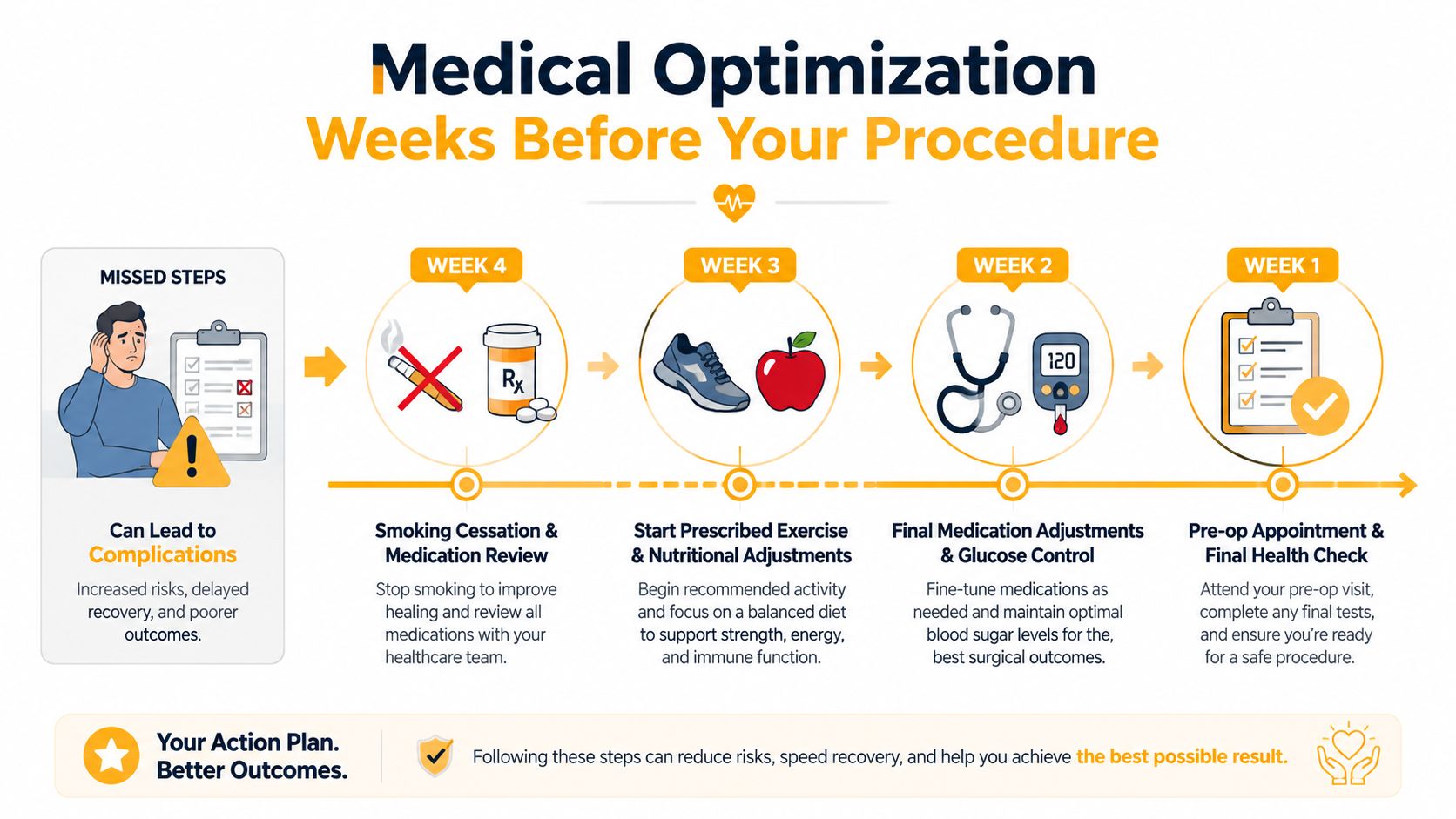
Use the weeks before surgery to stabilize health rather than pursue last-minute extremes. For procedure-specific healing questions, review your surgeon's guidance on how to minimize scarring.
Managing Medications and Supplements Before Surgery
Medication instructions are among the most misunderstood parts of surgical preparation. A drug that protects your heart can increase bleeding risk. A supplement that appears harmless may affect clotting or anesthesia. Diabetes medicines often require a different plan from blood-pressure tablets.
Do not stop a prescription on your own. Your surgeon, anesthesiologist, and prescribing clinician should weigh the operation's bleeding risk against the condition being treated.
Use a medication-by-medication review
Bring every prescription, over-the-counter product, injection, vitamin, and herbal supplement to the medication review. Record the dose, schedule, reason for use, and date and time of the last dose.
| Medication or supplement category | Typical hold before surgery | Key considerations |
|---|---|---|
| Anticoagulants and antiplatelets | Often 5 to 10 days, depending on the drug and procedure | Never stop without the prescribing clinician's plan. Blood-clot risk and bleeding risk must be balanced. |
| NSAIDs, such as ibuprofen or naproxen | Often 7 days | The surgeon may recommend another pain-relief option. Acetaminophen may be preferred when medically appropriate. |
| Fish oil, vitamin E, garlic, ginkgo biloba, St. John's wort, and turmeric | Often 2 weeks | These may affect bleeding or interact with anesthesia and other medicines. |
| GLP-1 receptor agonists and GLP-1/GIP agents | Individualized | Delayed gastric emptying can alter aspiration-risk planning. |
| Blood-pressure medicines | Varies, with some ACE inhibitors and ARBs often reviewed for the morning of surgery | Follow the anesthesiologist's written instructions. |
| Diabetes medicines and insulin | Individualized | Doses may change because you'll be fasting. SGLT2 inhibitors require particular attention because of euglycemic ketoacidosis risk. |
| Hormone therapies | Individualized | The plan depends on the therapy, procedure, clotting risk, and prescribing clinician's assessment. |
Use the table as a planning framework, not a personal prescription. Anticoagulant interruption depends on kidney function, half-life, clotting history, and surgical bleeding risk. Some patients need bridging or a carefully timed restart. Others should not interrupt therapy in the same way.
Give newer diabetes medicines special attention
Weekly injections used for diabetes or weight management are easy to overlook because they are not taken every day. Tell the anesthesia team the exact product, dose, schedule, recent dose date, nausea or vomiting, reflux, constipation, and early fullness. These details help the team assess gastric emptying and aspiration risk.
Earlier anesthesia advice commonly discussed holding weekly GLP-1 doses for one week before surgery or omitting a daily dose on the day of surgery. Current recommendations are more individualized and may consider dietary modification, symptoms, and overall risk rather than apply one instruction to every patient. Review the latest perioperative medication and GLP-1 guidance with your surgical and anesthesia teams.
Your diabetes plan may also need adjustment to prevent high or low blood sugar while you are fasting. Ask who will give the final instructions, when to take or hold each medicine, and what to do if your procedure is delayed. The goal is ensuring you understand the trade-offs and can consent freely.
Fasting Rules and Pre-Op Hygiene Protocols
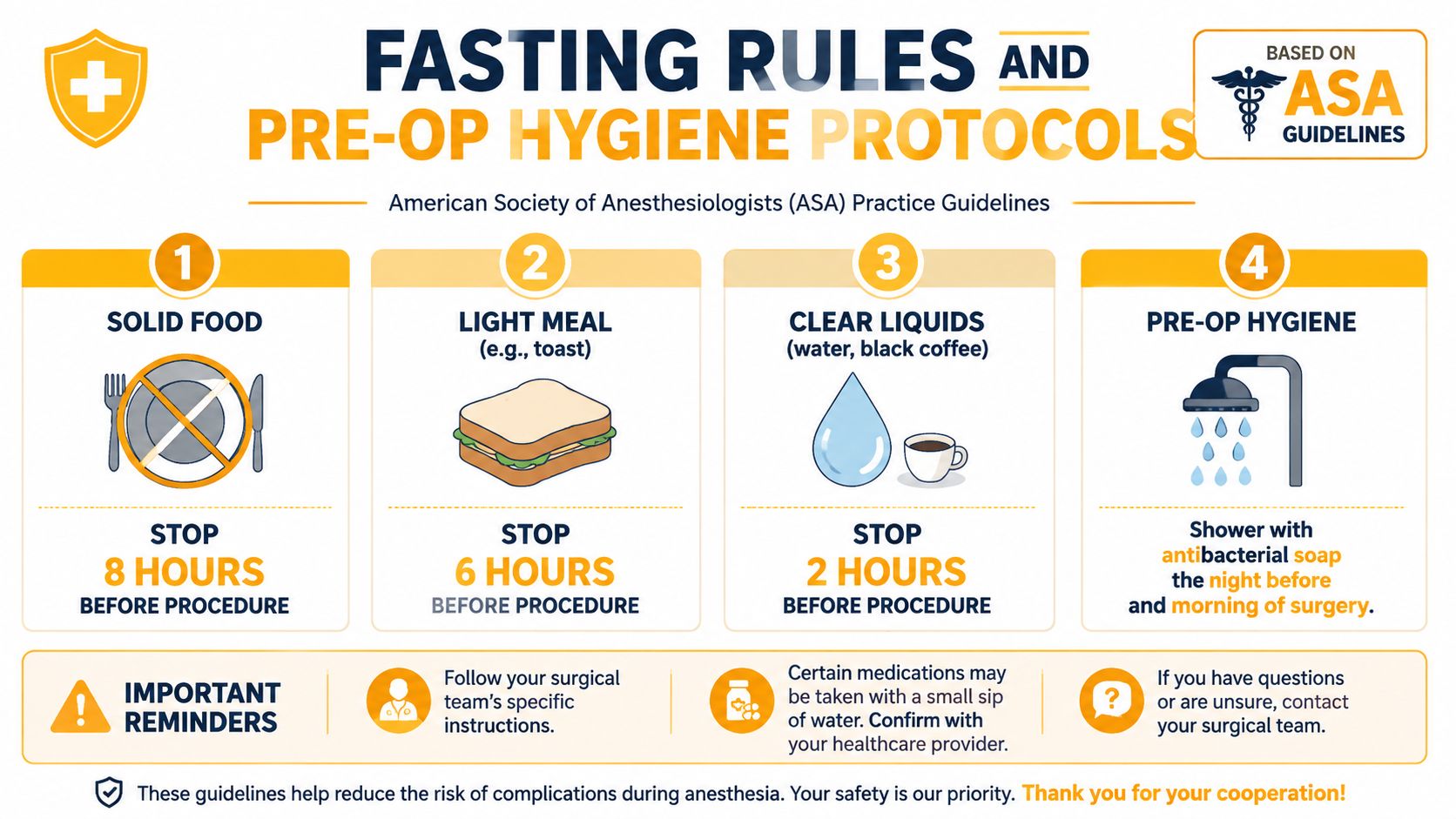
Fasting is designed to reduce the chance that stomach contents enter the lungs during anesthesia. The correct cutoff depends on what you consumed, not just the clock. Modern guidance has moved away from a blanket “nothing after midnight” rule toward item-specific windows (American Society of Anesthesiologists preoperative fasting guideline).
Match the cutoff to the food
For elective procedures, current anesthesia guidance retains these minimum fasting periods:
- Clear liquids: Stop at least 2 hours before anesthesia or induction.
- Breast milk: Stop at least 4 hours before.
- Infant formula: Stop at least 6 hours before.
- Nonhuman milk: Stop at least 6 hours before.
- A light meal: Stop at least 6 hours before.
- A full meal containing meat, fried food, or fatty food: 8 or more hours may be required (preoperative assessment and patient preparation guidance).
A light meal might be toast with a clear liquid. Clear liquids generally include water, clear apple juice, black coffee without cream, and clear broth. Milk, orange juice with pulp, protein shakes, smoothies, and creamy drinks aren't clear liquids.
Fasting means following your written instruction exactly. If you accidentally eat or drink after the cutoff, tell the team. Hiding it can create a safety risk, while reporting it lets anesthesia staff decide whether the timing or plan must change.
Confirm whether your procedure uses general anesthesia, deep sedation, or another technique. Patients with delayed gastric emptying, reflux, diabetes, bowel obstruction, or other aspiration risks may receive different instructions.
Reduce avoidable contamination
If your team recommends chlorhexidine, or CHG, shower the night before and the morning of surgery. Apply it as directed, lather gently, allow it to remain on the skin for about 5 minutes, and rinse thoroughly. Don't use it on the face, inside the ears, eyes, mucous membranes, or broken skin unless your clinical team gives specific instructions.
After the final shower, avoid lotions, deodorant, perfume, makeup, and body oils on the surgical day. Don't shave the operative site. If hair removal is needed, the facility can use clippers, which avoids the skin irritation caused by close shaving.
Brush your teeth unless your instructions say otherwise, but don't swallow water. Remove contact lenses, jewelry, piercings, and nail polish if requested. These small steps support skin assessment, monitoring, and infection-control procedures.
Planning Logistics for Surgery Day and Recovery
A smooth surgery day often depends on arrangements made at home, not inside the operating room. One patient may have a reliable driver but no adult available to stay nearby. Another may live several hours away and discover that the prescribed sleeping position is impossible in a standard hotel room.
Solve transportation and supervision first
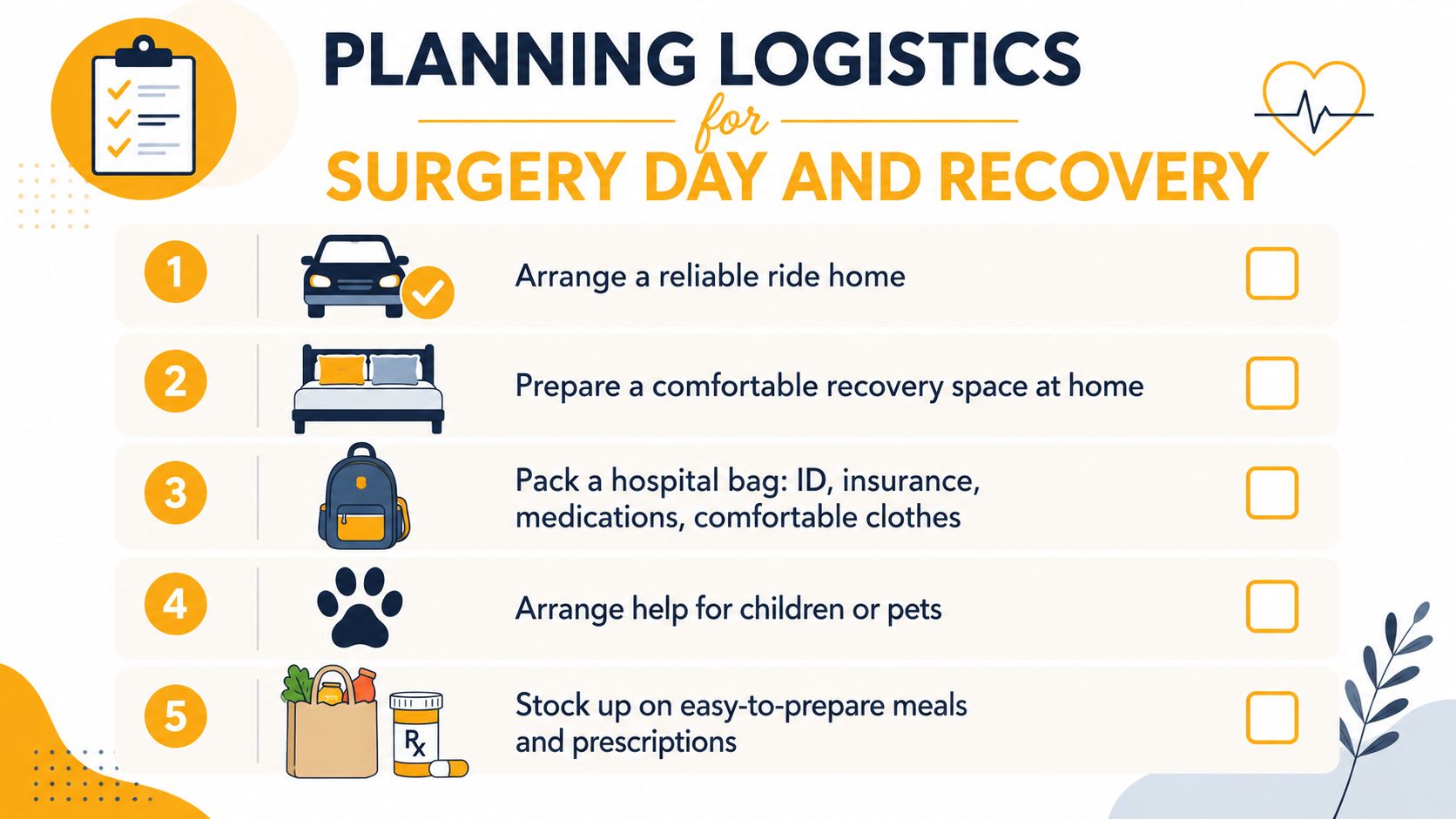
Arrange a responsible adult who can take you home and remain available after anesthesia. A rideshare or taxi alone may not meet the facility's discharge requirements, particularly when sedation or general anesthesia affects judgment, balance, and memory.
Ask your team how long you'll need supervision and when you can safely resume driving, work, exercise, and medication decisions. Don't assume you'll feel normal just because you've left the facility. Post-anesthesia restrictions can continue into the next day or longer, depending on the procedure and medicines used.
Out-of-town patients should confirm lodging before the procedure. Choose a location with practical access to the facility, elevator or ground-floor access when appropriate, a bathroom that's easy to reach, and space for your support person. Chernoff Cosmetic Surgery provides an out-of-town patient guide to help patients organize travel-related details.
Make home recovery physically easy
Arrange childcare and pet care before the final week. You may be unable to lift children, bend repeatedly, walk an energetic dog, or clean a litter box during the early recovery period. Ask your surgeon how long lifting and strenuous activity restrictions apply to your specific operation.
Create a recovery station before admission. Place pillows, water, chargers, prescribed medicines, tissues, entertainment, and a phone within reach. Prepare easy meals, fill prescriptions in advance, and arrange grocery delivery or help with errands.
Your sleeping setup matters when swelling, incisions, or surgical positioning make your usual bed uncomfortable. A recliner, extra pillows, or a ground-floor resting area may be useful, but follow your surgeon's positioning instructions rather than improvising.
When your team clears you for movement, use a gradual plan. This post-operative fitness advice offers general guidance on returning to activity, but your surgeon's restrictions take priority.
Mental and Emotional Readiness for Your Procedure
Physical preparation gets most of the attention, yet emotional readiness affects how patients interpret pain, swelling, limitations, and the pace of visible change. Anxiety can make ordinary recovery sensations feel alarming, while unrealistic expectations can turn a technically appropriate result into a disappointing experience.
Treat mental preparation as part of informed consent. Ask what will look normal immediately after surgery, which changes may take time, what discomfort is expected, and which symptoms require a call. For cosmetic procedures, review before-and-after examples with your surgeon and discuss what is realistically achievable for your anatomy and goals.
Use simple tools before admission
Controlled breathing can settle the physical cycle of worry. Try a slow inhale followed by a longer, comfortable exhale for several minutes, without forcing the breath or becoming light-headed. Guided visualization can also help, especially when you focus on concrete actions such as arriving, meeting the anesthesia team, resting at home, and attending follow-up appointments.
Structured journaling works best when it turns vague fear into specific questions. Write down:
- The fear: What outcome worries you most?
- The evidence: What information do you have, and what remains unknown?
- The question: What do you need your surgeon or anesthesiologist to explain?
- The support plan: Who will help you during the first days at home?
Don't use mindset exercises to suppress legitimate concerns. Use them to communicate clearly and make decisions from complete information.
A calm patient isn't a patient with no questions. Calm usually comes from knowing what to expect, who to call, and what the recovery plan requires.
Choose a support person who can listen without dismissing your concerns and help you follow instructions when you're tired. If anxiety is severe, persistent, or affecting sleep and decision-making, discuss counseling with your clinician before proceeding. A therapist can help you separate normal uncertainty from pressure, unrealistic expectations, or distress that deserves attention first.
A 2025 cross-sectional study of plastic-surgery patients identified unsatisfactory outcomes and intraoperative or postoperative pain among leading concerns (study of patient concerns before plastic surgery). Bring those concerns into the consultation. Emotional preparation isn't about promising a perfect experience. It's about making sure you understand the trade-offs and feel able to consent freely.
Your Complete Pre-Surgery Checklist by Timeline
Use this timeline as a planning aid, then replace general guidance with the written instructions from your own surgical and anesthesia teams. The most useful checklist is the one that connects health optimization with practical support, rather than treating fasting as the only task that matters.
Four weeks before
- Stop smoking: Begin cessation as early as possible and ask whether behavioral support or nicotine replacement is appropriate.
- Review medications: Provide a complete list of prescriptions, injections, over-the-counter medicines, vitamins, and herbal supplements.
- Discuss chronic conditions: Confirm the plan for diabetes, blood pressure, sleep-related breathing problems, and other relevant diagnoses.
- Report GLP-1 use: Identify semaglutide, tirzepatide, or other diabetes and weight-management injections during pre-op planning.
- Plan recovery time: Arrange work leave, childcare, pet care, transportation, and lodging if needed.
- Begin sensible conditioning: Follow only exercise guidance approved for your health and procedure.
Two weeks before
- Confirm testing: Ask whether blood work, medical clearance, or specialist review remains outstanding.
- Review supplements: Ask specifically about fish oil, vitamin E, garlic, ginkgo biloba, St. John's wort, turmeric, and other herbal products.
- Prepare the home: Set up your resting space, obtain pillows and easy meals, and plan for limited lifting or driving.
- Clarify questions: Write down concerns about anesthesia, pain control, scars, swelling, activity, and warning signs.
One week before
- Fill prescriptions: Obtain prescribed medicines in advance so you won't need an unnecessary errand after discharge.
- Finalize transportation: Confirm the driver, the pickup process, and who'll stay with you.
- Complete paperwork: Review the practice's patient forms and contact the office about anything unclear.
- Practice emotional preparation: Use breathing, visualization, journaling, or a counseling appointment if needed.
- Report illness: Call about new fever, cough, gastrointestinal symptoms, infection, or other health changes.
The night before
- Follow the correct fast: Identify whether your last intake is a clear liquid, light meal, or full meal, then use the exact cutoff your team provided.
- Complete hygiene steps: Use the prescribed surgical cleanser if instructed, and avoid shaving the operative site.
- Remove extras: Take off jewelry, piercings, makeup, and nail polish if directed.
- Prepare clothing: Choose loose, comfortable garments that won't interfere with dressings or access to the surgical area.
- Rest safely: Keep your phone, identification, instructions, and transportation details ready.
Surgery morning
- Confirm fasting compliance: Don't guess about water, coffee, gum, candy, or medication. Call if the instructions aren't clear.
- Take only approved medicines: Use the dose and small amount of water specified by your clinical team.
- Bring essentials: Pack identification, insurance information, medication details, and required paperwork.
- Arrive as instructed: Allow time for check-in and pre-anesthesia assessment without creating your own last-minute rush.
- Speak up: Tell the team about accidental intake, new symptoms, anxiety, medication changes, or anything that feels different.
A structured optimization pathway can produce measurable safety benefits. In a prospective case-control study of total joint arthroplasty, formal optimization was associated with lower odds of superficial surgical-site infection, with an adjusted odds ratio of 0.64 and a 95% confidence interval of 0.42 to 0.97. Larger protocol data summarized in orthopedic literature reported surgical-site infection decreasing from 2.60% to 0.56%, with a relative risk of 0.21 and a 95% confidence interval of 0.12 to 0.37, across 8 cohorts and 9,915 patients (study of structured preoperative optimization). The practical sequence is straightforward: screen, stratify, optimize, then consent.
Chernoff Cosmetic Surgery provides individualized surgical planning and pre-procedure education covering health history, medications, nutrition, laboratory testing, and recovery preparation. Visit Chernoff Cosmetic Surgery to discuss your procedure, receive a personalized pre-op plan, and arrange the support you'll need for a safer, more organized recovery.