
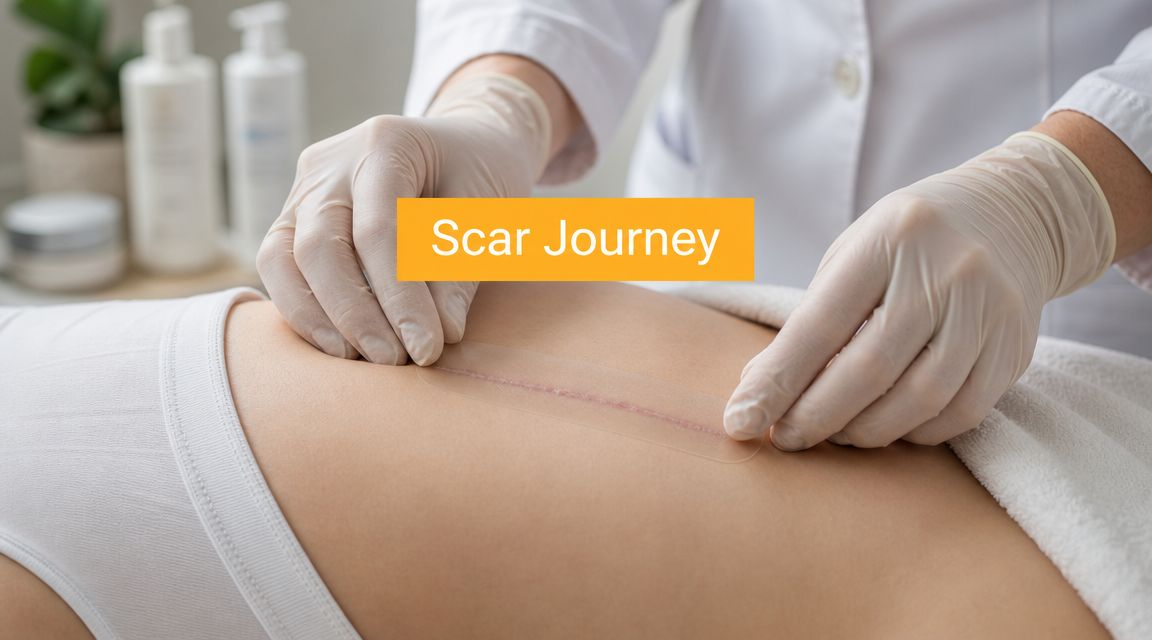
A cosmetic surgery scar is the body's natural response to an incision, but its final appearance is far from a matter of chance. The journey from a fresh, healing incision to a faint, faded line is a complex process, but it's one you can actively support for a more discreet and beautiful outcome.
Table of Contents
- The Life Cycle of a Surgical Scar
- Immediate Post-Op Care for Minimal Scarring
- Modern Treatments for Fading Surgical Scars
- Your Scar Healing and Treatment Timeline
- Partnering with Chernoff Cosmetic Surgery for Your Best Result
- Frequently Asked Questions About Surgical Scars
The Life Cycle of a Surgical Scar
Every scar tells the story of your body's incredible ability to heal. It’s important to remember that a precise surgical incision heals much differently than an accidental cut. The healing process itself unfolds in three distinct stages, much like building a house from the ground up.
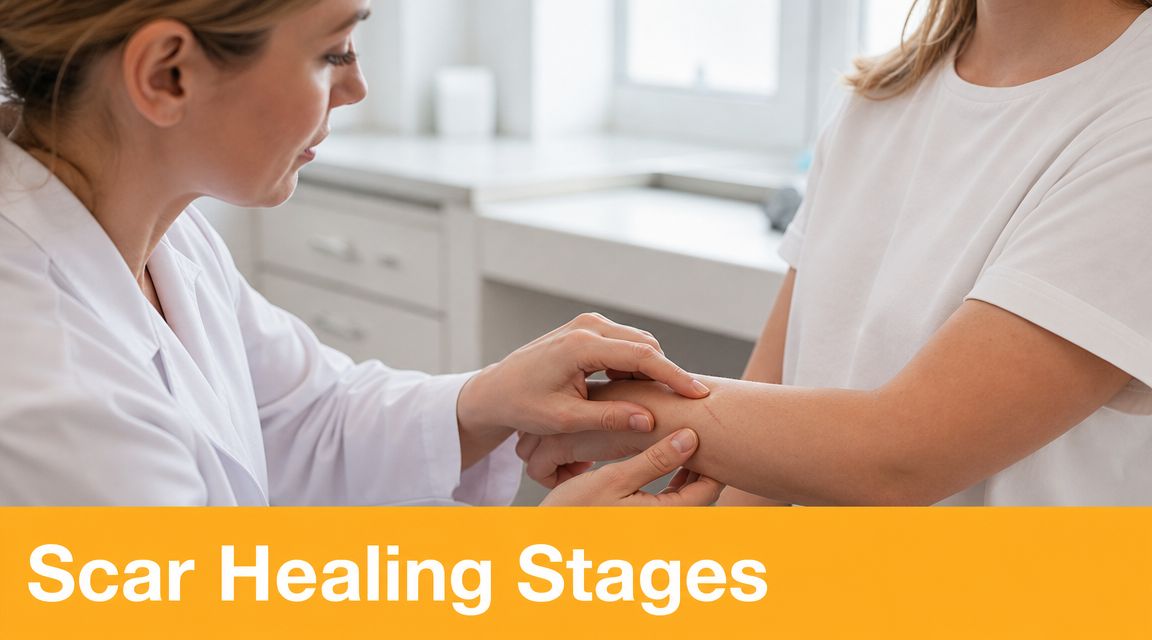
First is the inflammation phase, which is all about laying the foundation. Your body’s immune system gets to work cleaning the wound, so you’ll notice some redness and swelling. This is a perfectly normal—and necessary—first step.
Next up is the proliferation phase, where the framework goes up. During this stage, your body starts producing collagen to close the wound and build new tissue. The scar might look more prominent for a while, but this is a sign of active, healthy healing.
Finally, the maturation phase begins. This is the longest part of the journey, sometimes lasting a year or more, where all the finishing touches are put on the house. The collagen reorganizes, and the scar gradually becomes flatter, softer, and lighter. Patience is your best friend during this remodeling process.
What Determines How Your Scar Will Look?
Several factors come into play when determining your scar’s final appearance. Your genetics, skin type, and even your skin tone play a significant role. The type of procedure you have also has a major impact on how visible a scar might be.
For example, while unfavorable scarring is a known risk with any surgery, its frequency varies. Research shows the incidence can be as low as 5% for a breast augmentation but can rise to 8% after an abdominoplasty. In a study of over 900 surgical patients, those who had breast or facial procedures rated their scars more positively than those who had tummy tucks. This tells us that both the type of surgery and where the scar is located influence the patient experience.
A surgical scar is not just a mark; it is a dynamic, evolving tissue. Understanding its life cycle empowers you to partner with your body and your surgical team to guide it toward the best possible result.
Knowing what's happening beneath the surface helps you navigate your recovery with confidence. This knowledge allows you to better support the healing process and work toward a discreet, aesthetically pleasing result. For a deeper look at managing the recovery journey, you can learn more about managing expectations during the healing process in our related article. For more complex cases, this guide offers excellent support for facial injury patients.
Immediate Post-Op Care for Minimal Scarring
The first few weeks after your procedure are a critical time for healing. Think of your fresh incision like a delicate seedling—the care it receives now will determine how it grows and matures. This immediate post-operative period is your chance to actively influence the final appearance of your cosmetic surgery scar.

Your surgeon will give you specific instructions tailored to your procedure, and following them is the single most important thing you can do. This usually involves gentle cleansing, keeping the area protected from friction, and making sure it stays properly moisturized. For a closer look at what to expect after your surgery, you can read more about Dr. Chernoff’s approach to postoperative care.
Protecting Your Healing Incision
Proper wound care is simply non-negotiable if you want to minimize scarring. The main goals are to keep infection at bay and avoid putting any unnecessary stress on the new, fragile tissue.
- Keep It Clean and Dry: You’ll be instructed to gently clean the incision, usually with mild soap and water, and then carefully pat it dry. It's crucial to avoid soaking in baths, hot tubs, or pools until your surgeon gives you the all-clear.
- Shield from the Sun: UV radiation is a scar’s worst enemy. Sun exposure can cause it to darken permanently, a condition known as hyperpigmentation. Always keep the incision covered with clothing or a protective dressing.
- No Picking or Scratching: As your incision heals, it will probably get itchy. Resist the urge to scratch or pick at scabs, as this can disrupt the delicate healing process and lead to a wider or more noticeable scar.
Your body is working hard to repair itself. Your job is to create the best possible environment for that healing to happen, free from infection, tension, and sun damage.
Minimizing Tension and Supporting Recovery
Beyond keeping the wound clean, the way you move your body matters immensely. Tension is one of the biggest reasons scars stretch out or become wider than they should be, which is why modifying your activities is so crucial.
Avoiding strenuous exercise, heavy lifting, or any movements that pull on the incision site gives the healing tissue the peace and quiet it needs. For example, after a tummy tuck, you’ll need to avoid core exercises. After a breast augmentation, you’ll have to limit how high you lift your arms. You might even need to adjust your sleeping position to keep pressure off the area.
This expert post-surgical recovery guide offers valuable insights into the broader post-operative journey, including general recovery tips that help your scars heal beautifully. By mastering these early steps, you set the foundation for a smoother, fainter scar down the road.
Modern Treatments for Fading Surgical Scars
Once your incision has fully healed and the initial recovery phase is over, the real work of managing your cosmetic surgery scar can begin. While time is certainly a powerful healer, we have a whole toolbox of modern treatments that can dramatically improve a scar’s final color and texture, helping it blend almost seamlessly with your skin.
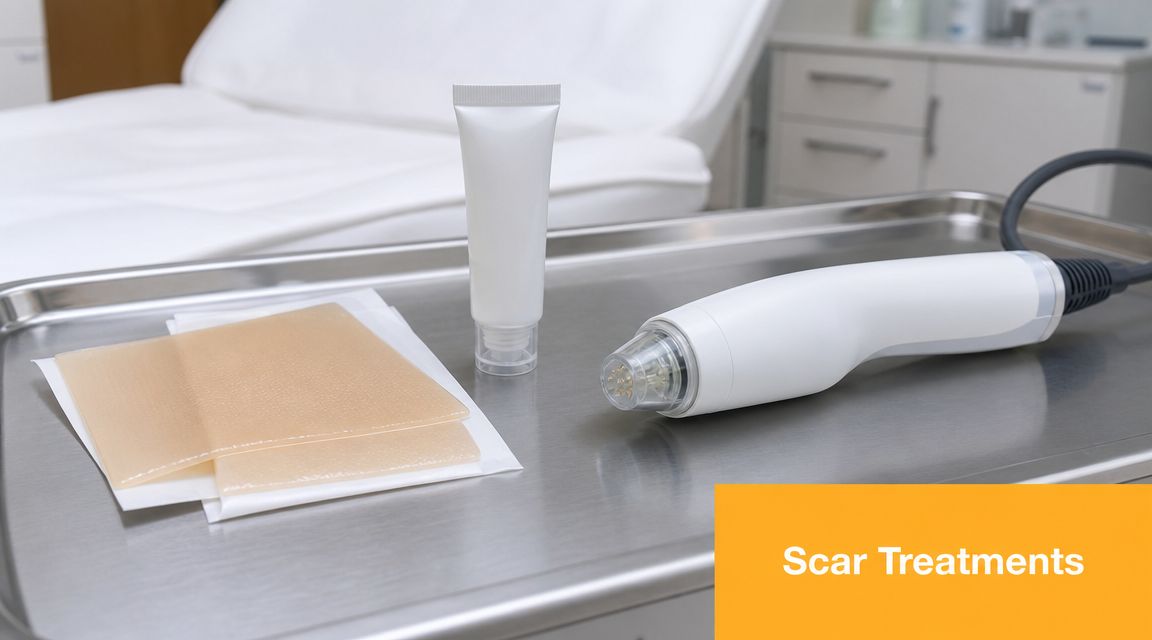
The foundation of any good non-surgical scar therapy plan starts with medical-grade silicone. It’s one of the most scientifically proven topical treatments we have, available as easy-to-use gels or sheets.
Silicone works by creating a breathable, protective barrier that locks in moisture. Think of it like a tiny, personal greenhouse for your healing skin. This super-hydrated environment helps keep collagen production in check, which is key to preventing scars from becoming thick, raised, or discolored.
Non-Surgical Treatment Options
For scars that need a little more help to fade, we can turn to advanced technologies that remodel the tissue and refine its appearance. Each treatment works differently, so we choose the right one based on your specific scar and skin type.
To help you understand the options, here is a quick comparison of the most common non-surgical approaches.
Comparing Non-Surgical Scar Treatment Options
| Treatment | Best For | How It Works | Ideal Candidate |
|---|---|---|---|
| Silicone Gels/Sheets | Early prevention of raised or discolored scars | Creates a hydrated barrier to regulate collagen | Anyone with a new or healing surgical scar |
| Laser Treatments | Redness, dark pigmentation, and uneven texture | Uses focused light to break down scar tissue and stimulate new collagen | Patients with colored or textured scars |
| RF Microneedling | Atrophic (depressed) scars and poor texture | Tiny needles create micro-injuries while delivering radiofrequency energy to trigger deep tissue remodeling | Those needing to improve both texture and firmness |
| Steroid Injections | Raised, thick (hypertrophic) scars | Corticosteroids are injected to reduce inflammation and calm overactive collagen production | Individuals whose scars are becoming noticeably raised or itchy |
These treatments are powerful tools, but the goal is always refinement, not complete erasure. By applying the right therapy at the right time, we can guide the healing process toward a much smoother, less noticeable result.
Advanced Skin Resurfacing for Texture and Tone
When at-home treatments aren't enough, professional skin resurfacing offers a powerful solution. These procedures essentially "remodel" the scar from the inside out.
Laser treatments, for instance, act like a high-tech way to smooth and repaint the skin. By delivering focused light energy, they can break down old scar tissue, kickstart new collagen growth, and reduce lingering redness. For scars with significant texture issues, some patients explore CO2 laser resurfacing to achieve a smoother surface.
Radiofrequency (RF) Microneedling is another fantastic option. This treatment is a bit like aerating a lawn to encourage new grass to grow; it uses tiny needles to create micro-channels in the skin while delivering RF energy deep into the dermis. This combination sparks a robust healing response, encouraging fresh, healthy tissue to replace the disorganized scar tissue.
Targeted Solutions for Specific Scar Problems
Not all scars are created equal, which is why a personalized treatment plan is so crucial. If a scar becomes raised, red, and itchy—what we call a hypertrophic scar—it needs a different approach than a flat, pale one.
Here are a couple of targeted solutions we use:
Steroid Injections: For scars that are building too much collagen and becoming raised, we can use precise injections of corticosteroids. These injections work to "calm down" the overactive tissue, reducing inflammation and helping flatten the scar over time.
Fractional CO2 Laser: This specific laser is one of our go-to treatments for improving scar texture and blending it with the surrounding skin. You can learn more about fractionated CO2 laser treatments and how this technology works to smooth and resurface the skin.
Ultimately, combining dedicated at-home care with the right professional therapies gives you the best chance at achieving a smooth, discreet result. It’s about taking control of your healing journey to get the best outcome possible.
While today's non-surgical treatments can work wonders for most scars, some simply won't respond and require a more definitive solution. This is where surgical scar revision comes in as the most practical path forward. It’s a specialized procedure where a surgeon meticulously removes the old, problematic scar tissue and then re-closes the incision using advanced techniques to foster a better-healed cosmetic surgery scar.
You can think of it as trading an unpredictable, poorly healed scar for one that is intentionally designed from the start to be finer, flatter, and less noticeable. The goal isn't to magically erase the scar—any incision will leave some mark—but to replace a prominent one with another that blends far more seamlessly with your skin. For certain challenging scars, this is often the best, and only, way to achieve a significant improvement.
Identifying Scars That May Need Revision
Not every scar is a good candidate for revision surgery. This procedure is typically reserved for scars that have specific, challenging characteristics and haven't improved enough with other treatments. The final decision always comes after a thorough evaluation by your surgeon.
Ideal candidates for surgical revision often have scars that are:
- Widened or Stretched: These are scars that have spread out over time, becoming much wider than the original incision line. This often happens due to tension on the skin as it healed.
- Depressed or Atrophic: Scars that are sunken or indented, creating a noticeable shadow or divot in the skin’s surface.
- Contracted: Scars that are tight and pull on the surrounding skin, sometimes even restricting normal movement. This is a common issue for scars located near joints.
- Poorly Positioned: A scar that was placed in a non-ideal location or at an angle that makes it more conspicuous than it needed to be.
The decision to revise a scar is about improving its quality, not chasing an impossible standard of perfection. It’s a strategic choice to give your body a second chance to heal, this time under more controlled and ideal conditions.
The Right Timing for Surgical Intervention
When it comes to scar revision, patience is absolutely essential. A revision is almost never performed on a new or immature scar. Surgeons will typically recommend waiting at least 12 to 18 months after your initial cosmetic surgery before even considering a revision.
This waiting period is non-negotiable because it gives the original cosmetic surgery scar the time it needs to fully mature. Scars change dramatically during the first year, often softening, flattening, and fading all on their own. What looks like a concerning scar at six months might look significantly better by the one-year mark. Revising a scar too early means operating on tissue that is still actively healing, which can backfire and lead to an even worse outcome.
Ultimately, surgical revision can be an excellent solution for the right patient. Studies confirm that patient satisfaction is often high, with one reporting that 82% of patients felt their scars were better after revision. For stubborn scars, combining excision with other therapies can significantly improve results, demonstrating the power of a well-timed, expert approach. To see how effective these combined strategies can be, you can read the full research on scar revision outcomes.
Your Scar Healing and Treatment Timeline
Patience is probably the hardest part of recovering from cosmetic surgery, especially when it comes to your scar. The journey from a fresh incision to a faint, barely-there line is a process that takes a full year, and sometimes even longer. Understanding what to expect along the way helps you stay calm and work with your body's natural healing rhythms.
Your scar’s appearance will change dramatically over these 12+ months. At first, it will look red, a bit raised, and quite noticeable—that’s your body sending a rush of new collagen to the site to knit everything back together. Over the following months, this intense activity will slow down, and the scar will enter a remodeling phase where it gradually softens, flattens, and fades.
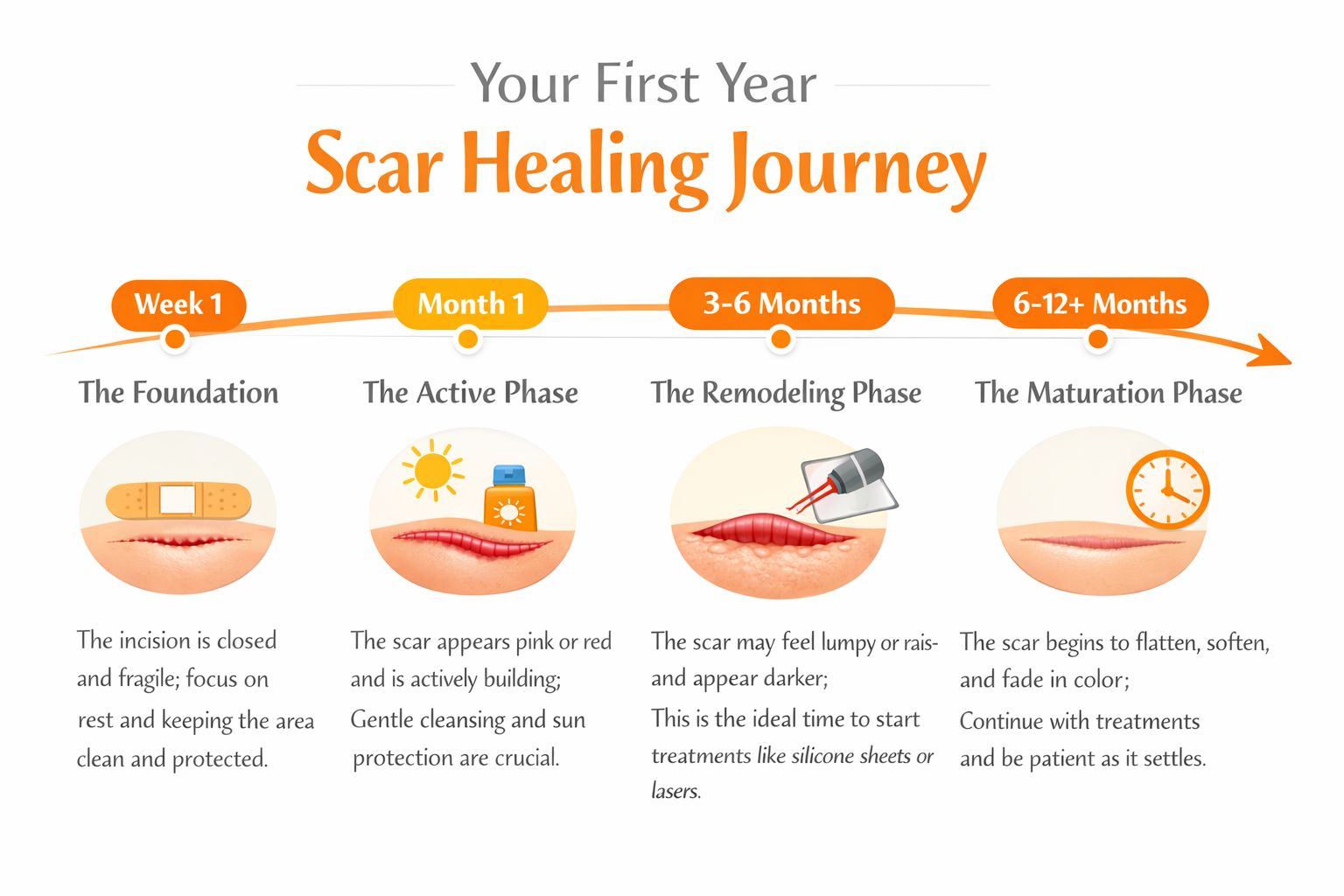
Your First Year Scar Healing Journey
Knowing the roadmap for your scar's evolution makes the process much less stressful. To give you a clear picture, here’s a breakdown of what your scar will look like and what you should be doing at each key milestone.
| Timeframe | Typical Scar Appearance | Recommended Patient Actions |
|---|---|---|
| Week 1 | A thin, red, and fragile line. | Focus on rest. Follow wound care instructions to the letter to prevent infection. |
| Month 1 | Pink or red, slightly raised, and often at its most prominent. | Continue gentle cleansing. Start strict sun protection. Avoid any strain on the incision. |
| Months 3-6 | Can feel lumpy, firm, or raised. Color may darken before fading. | Ideal time to start treatments. Use silicone sheets or gels. Discuss in-office options like lasers. |
| Months 6-12+ | Gradually becomes flatter, softer, and paler. | Keep up with your treatments and sun protection to ensure the best final result. |
This timeline helps you see that the most active—and sometimes most concerning—changes happen in the first six months. This is also your biggest window of opportunity to influence how your scar heals.
From Active Healing to Final Maturation
After the first few months, the scar enters a long, slow period of refinement. This is where your consistency and patience really pay off.
The first three months are all about initial healing, but the period from months three to six is the prime time for intervention. Your scar may look its worst during this phase—often feeling firm and looking quite red—but this is a sign that it's actively remodeling. This makes it the perfect time to be proactive with treatments like silicone therapy or to begin a series of laser sessions that can guide the healing process toward a better outcome.
What you see at three months is absolutely not your final result. The scar is still actively changing, which makes this the perfect time to start treatments that can make a real difference.
Finally, you enter the maturation phase, which can last from month six to well over a year. During this stage, the scar will continue to flatten, soften, and lose its red or pink pigment. It will become much less noticeable as it blends into the surrounding skin. Continuing your sun protection and any recommended treatments during this time will help you achieve the faintest, flattest scar possible.
Partnering with Chernoff Cosmetic Surgery for Your Best Result
Achieving a beautiful, natural-looking outcome is our guiding philosophy at Chernoff Cosmetic Surgery. This commitment doesn’t end in the operating room. Dr. Chernoff’s approach combines meticulous surgical technique with a complete suite of postoperative therapies designed to manage and minimize your cosmetic surgery scar from day one.
This comprehensive care plan gives you peace of mind, especially for procedures where proactive scar management is essential for an exceptional result, like tummy tucks, breast lifts, and facelifts. We provide dedicated follow-up care and personalized treatment plans, ensuring you have the support you need throughout your entire healing process.
A Partnership in Your Transformation
Our team is here to support you at every stage of your journey. We believe in creating a true partnership with our patients by offering the resources and expert guidance you need to achieve an outcome you’ll love.
A cosmetic surgery scar is a process, not a problem. With the right care and a dedicated team, it can become a faint reminder of a positive transformation.
We make sure every patient understands their options, from immediate post-op care to advanced treatments like lasers or RF microneedling down the road. Ultimately, our message is one of reassurance: we are here to guide you every step of the way, helping you navigate the healing timeline with confidence and support. Your successful result is our shared goal.
Frequently Asked Questions About Surgical Scars
It's natural to have questions about scarring after cosmetic surgery. Understanding the healing process is the first step toward achieving a beautiful, discreet result. Below, we’ve answered some of the most common concerns our patients have.
Will My Cosmetic Surgery Scar Ever Completely Disappear?
A scar is the body's natural signature of healing, so no incision will ever vanish completely. But the goal of expert cosmetic surgery isn't to erase the mark—it's to refine it until it’s barely noticeable.
A well-healed scar will eventually fade to a fine line, softening and blending into your surrounding skin. Think of it as a story that only you and your surgeon need to know the details of.
The objective is to make the scar so discreet that it’s virtually unnoticeable to a casual observer. With patience and the right treatments, most patients achieve a result they are very happy with.
This maturation process takes time, typically 12 to 18 months. It's important to be patient and allow your body to complete its work.
Can I Prevent a Surgical Scar from Forming?
Because scarring is the body’s essential method for repairing an incision, preventing one isn't possible. What you can do is give your body the best possible environment for creating a minimal, clean scar.
Following your surgeon's post-operative instructions is the single most important factor. These guidelines are designed to protect your incision and support optimal healing.
- Proper Wound Care: Keeping the incision clean and protected is your first line of defense against infection, a major cause of poor scarring.
- Sun Protection: UV rays can permanently darken a healing scar, making it far more visible. Be diligent with sun protection for at least the first year.
- Minimize Tension: Avoid activities that stretch or pull on the incision. This helps prevent the scar from widening as it heals.
When Should I Start Using Scar Treatments?
Timing is everything. Most surgeons, including Dr. Chernoff, recommend waiting until the incision has fully closed and any stitches are out, which is usually around 2-3 weeks after surgery.
Starting treatments like medical-grade silicone sheets or gels too soon can disrupt the delicate initial healing phase. Once your surgeon gives you the green light, consistent use of these proven products gives you the best chance of minimizing scar thickness and discoloration. Always get approval from your surgical team before starting any new scar treatment.
At Chernoff Cosmetic Surgery, we are committed to guiding you through every phase of your recovery to help you achieve your natural best. Schedule your personal consultation today to learn more about our comprehensive approach to scar management.