
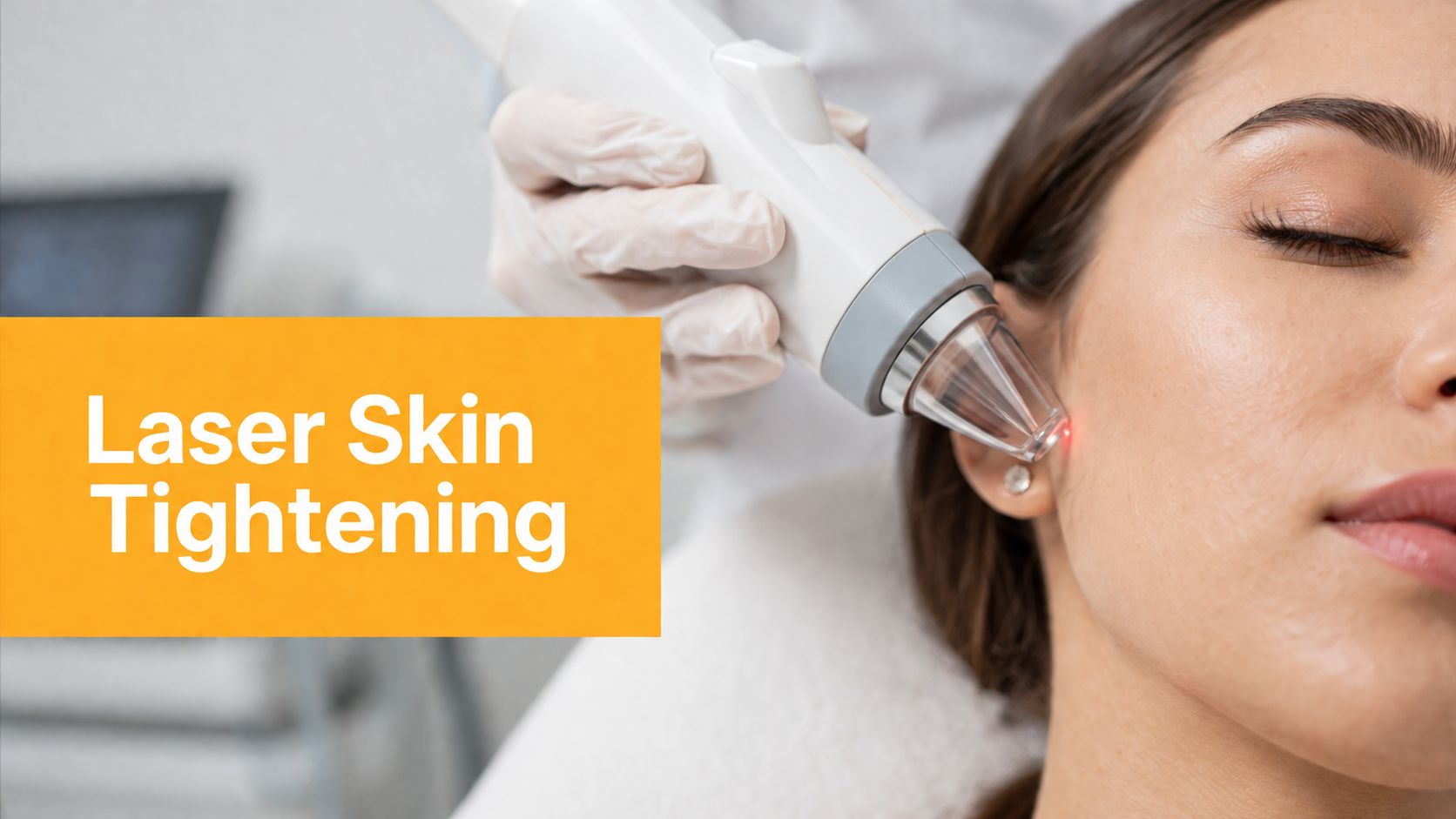
You catch it in ordinary moments first. The jawline looks softer in the mirror. Makeup settles differently around the mouth. The skin at the lower face or neck doesn't bounce back the way it used to, and the creams that once felt helpful now seem limited.
That's usually when people start looking for something stronger than skincare but less invasive than surgery. A skin tightening laser treatment often enters the conversation at exactly that point, because it works below the surface where laxity begins. Interest in these treatments has grown for a reason. The global market for laser skin tightening reached about $4.1 billion in 2023 and is projected to reach about $11.8 billion by 2033, while cosmetic laser procedures in the U.S. increased 248% between 2000 and 2018, according to cosmetic laser treatment statistics and effectiveness data.
Patients deserve a clear explanation before they commit. Laser tightening can be a very good option for the right person, but it isn't magic, and it isn't a substitute for every other facial rejuvenation treatment. If you're still sorting through your options, this overview of med spa laser treatments gives helpful context on where laser-based care fits into a broader aesthetic plan.
Table of Contents
- Introduction Beyond Creams and Serums
- How Lasers Renew Your Skin from Within
- A Guide to Different Laser Technologies
- Is Laser Skin Tightening Right for You
- Your Treatment Timeline From First Session to Final Results
- Lasers vs Other Options Where Does It Fit In
- The Chernoff Difference Expertise in Laser Rejuvenation
Introduction Beyond Creams and Serums
Topical skincare can improve hydration, pigment irregularity, and surface texture. What it can't do well is tighten tissue that has started to loosen. Once collagen support declines and the skin begins to drape differently, the problem sits deeper than a serum can reach.
That's where laser tightening becomes relevant. Instead of coating the surface, it delivers controlled energy into the skin to trigger a repair response. The goal isn't to stretch skin tight in a single afternoon. The goal is to stimulate your own tissue to rebuild support gradually and naturally.
This distinction matters because many patients arrive with the wrong expectation. They've heard “tightening” and assume the result should look immediate and permanent. In practice, the most satisfying outcomes usually come from a measured treatment plan, careful device selection, and enough time for the skin to respond.
Lasers can improve firmness and quality, but they work best when the degree of laxity matches the technology.
A good consultation focuses on that match. The questions aren't just Where is the loose skin? They're also How much loose skin is there, what else is contributing to the aged appearance, and would you benefit more from resurfacing, collagen stimulation, volume restoration, surgery, or a combination.
How Lasers Renew Your Skin from Within
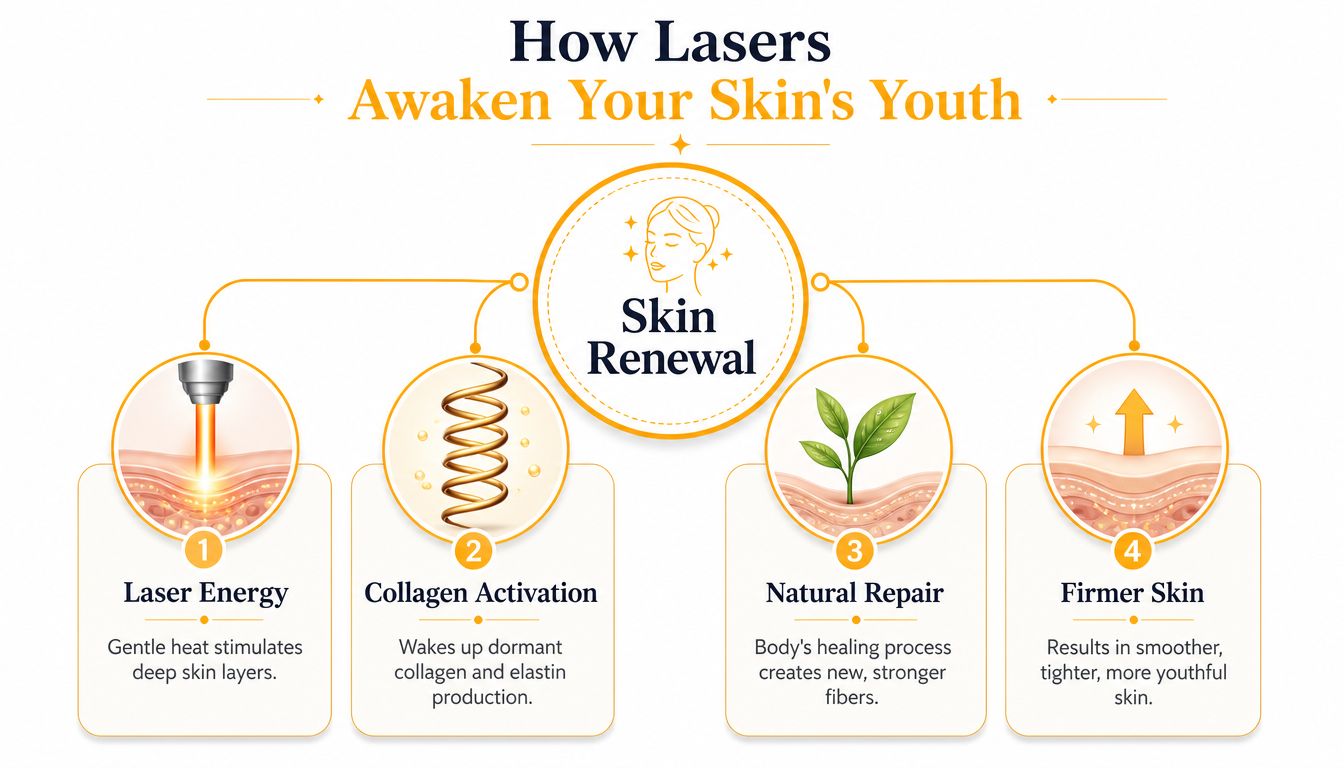
Laser tightening works because heat, when delivered with control, can prompt the skin to repair itself. A simple way to think about it is this: the treatment wakes up collagen production that has slowed down over time. The skin's support system gets a signal that it needs to rebuild.
What the energy is actually doing
During treatment, the device delivers light-based energy that creates controlled thermal stimulation in targeted tissue. That heat does two things. First, it causes some immediate contraction in existing collagen. Second, and more important for lasting change, it starts a healing cascade that encourages new collagen formation.
This is why the treatment often feels more gradual than patients expect. You may notice an early change, but the fuller improvement depends on your body laying down new structural fibers over time. The skin firms as that remodeling matures.
For people who are also evaluating wrinkle-focused resurfacing, this explanation of CO2 laser options for wrinkles can help clarify how tightening and resurfacing overlap but aren't identical goals.
Surface-focused and deeper-focused approaches
Not every laser works the same way. Some treatments focus more on the skin's surface, where they improve fine lines, texture, and visible sun damage while also contributing some tightening. Others place more emphasis on deeper dermal heating with less disruption of the outer layer.
A practical distinction:
- Surface-focused treatments often help most when roughness, etched lines, and visible photoaging are part of the complaint.
- Deeper-focused treatments tend to be chosen when the main priority is mild laxity and collagen stimulation with less visible recovery.
- Combination planning often makes sense when a patient has both texture change and early sagging.
Practical rule: The best laser is not the most aggressive one. It's the one that targets the problem you actually have.
That's why a responsible plan doesn't start with a device. It starts with diagnosis.
A Guide to Different Laser Technologies
Different laser categories solve different problems. Patients often think of “laser” as a single treatment, but in practice it's more like a toolbox. The right tool depends on whether the main issue is texture, wrinkling, skin tone, early laxity, or a mix of several concerns.
CO2 when texture is a major concern
CO2 lasers are often chosen when the skin looks weathered, lined, or uneven in a way that goes beyond simple looseness. This category is useful when someone wants stronger resurfacing along with tightening support.
A CO2 approach may make sense if you notice:
- Crepey texture around the mouth or lower eyelids
- More etched lines that don't improve with skincare
- Sun-damaged skin quality in addition to laxity
The trade-off is straightforward. Because CO2 can work more aggressively at the surface, downtime and aftercare become more important parts of the discussion.
Erbium for a lighter resurfacing approach
Erbium lasers generally fit patients who want resurfacing but don't need the same level of intensity. They can be a good middle ground when the surface needs refinement, but the person wants a lighter recovery profile than a stronger ablative treatment may require.
This category often appeals to patients who have early textural change, mild fine lines, and a lower tolerance for downtime. It can also be a thoughtful option when the goal is refreshment rather than dramatic correction.
NdYAG when deeper heating and skin tone flexibility matter
Nd:YAG lasers are often discussed when deeper heating is the priority and when broader skin tone compatibility matters in treatment planning. They don't play the same role as a resurfacing-focused device. Their strength is more about collagen stimulation below the surface.
That makes them worth considering for patients with mild laxity who aren't mainly seeking peeling or visible resurfacing. In those cases, the treatment philosophy is less about removing damaged outer layers and more about encouraging support from within.
A simple way to compare the categories is to think in terms of goals:
| Laser Type | Often Chosen For | Main Strength | Main Trade-off |
|---|---|---|---|
| CO2 | Wrinkles, texture, photoaging | Strong resurfacing plus tightening support | More recovery |
| Erbium | Mild to moderate surface concerns | Refinement with a gentler approach | Less aggressive correction |
| Nd:YAG | Early laxity and deeper dermal heating | Collagen stimulation with limited surface disruption | Less surface change |
No table can replace an exam, because real faces rarely present with only one issue. Many patients need a blended plan. Some need resurfacing plus volume support. Others have enough tissue descent that surgery will produce a cleaner result than repeated non-surgical treatments.
Is Laser Skin Tightening Right for You
A skin tightening laser treatment works best when expectations are realistic and the anatomy is favorable. The ideal candidate usually isn't the person with severe sagging. It's the person who has started to notice looseness but still has enough skin quality to respond well to collagen stimulation.
Who tends to do well
You're more likely to be a good candidate if the concern is early to moderate laxity rather than heavy tissue descent. Patients often describe this as skin that looks less firm, less crisp, or less supported, especially along the cheeks, jawline, mouth, or neck.
Good candidates also tend to share a few practical traits:
- They want improvement, not a surgical-level change
- They can follow aftercare closely, especially around sun protection and skin healing
- They understand that results build gradually
- They're open to a series, not a one-visit promise
People who do well are usually seeking a refreshed, more rested appearance. They often want their skin to look firmer and smoother without looking treated.
Who should pause and consider other options
Laser treatment is not the right answer for everyone. If you have significant jowling, prominent loose neck skin, or a great deal of excess tissue, a laser may improve skin quality but won't reposition what has descended.
The American Society of Plastic Surgeons discussion of laser resurfacing and facial rejuvenation makes an important distinction: laser treatments can provide a slight lift, but they do not replace a surgical facelift for significant jowling or loose skin.
If your main complaint is hanging tissue rather than thinning skin, the limiting factor is position, not just collagen.
Other reasons to slow down include poorly controlled expectations, active irritation in the treatment area, or a desire for dramatic correction without the acceptance of surgery. In those cases, the best consultation is the one that tells you not just what can be done, but what won't work well enough to justify the time and expense.
Your Treatment Timeline From First Session to Final Results
A patient comes in two weeks after her first treatment, looks closely in the mirror, and asks whether this is all the improvement she is going to get. That question gets to the heart of laser tightening. Early change can happen, but the main benefit develops later, as collagen is rebuilt over time.
Why one treatment usually isn't enough
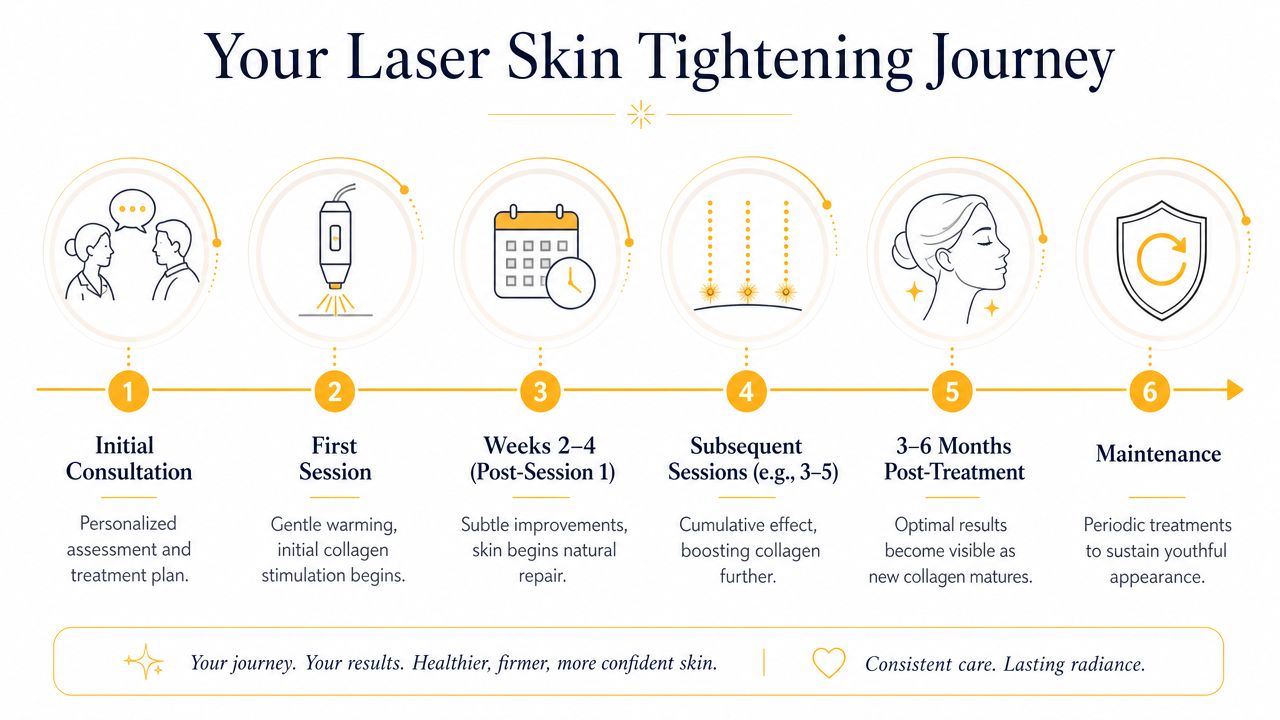
Laser tightening works through controlled heat delivered into the skin. That heat can create some early contraction, but a single visit rarely produces the level of collagen remodeling patients are hoping for. In practice, meaningful improvement usually requires a structured series, often three to six treatments spaced several weeks apart, followed by time for the tissue to mature.
The "one-and-done" sales message sets the wrong expectation. A first session starts the process. It does not finish it.
The early response is not the finished result. The most significant change comes from the remodeling phase that follows.
Patients who understand that timeline tend to be much happier with their experience. They judge progress month to month, not day to day.
What the process usually looks like
A good treatment plan follows the biology of healing, not the calendar of a promotion.
Consultation and skin analysis
The first step is deciding what is causing the concern. Mild laxity, crepey texture, sun damage, volume loss, and descended tissue can look similar in the mirror, but they do not respond the same way. That distinction shapes the plan.First session
Treatment triggers the initial wound-healing response. Some patients notice subtle firmness early, along with temporary redness or swelling. Those immediate effects are not the endpoint.Series of treatments
Repeated sessions build on one another. This cumulative approach is why spacing and consistency matter. If the skin needs more than one energy-based modality, some patients may benefit from pairing laser-based rejuvenation with Morpheus8 skin remodeling treatment when the anatomy and goals support it.Remodeling phase
After the last session, the skin is still working. Collagen fibers reorganize and mature over the following months, which is why final results often lag well behind the final appointment.Maintenance
Skin continues to age. Sun exposure, smoking, weight fluctuation, and skincare habits all influence how long results hold. Maintenance treatment is often reasonable, but the timing depends on how your skin responds and what degree of correction you want to preserve.
Recovery is usually straightforward for patients with modest goals, but there are trade-offs. Mild redness and swelling are common, and some people feel dry, tight, or more sensitive for several days. That is one reason I tell patients to plan around important social events rather than assuming they will look camera-ready immediately.
Cost is also better understood as a treatment plan, not a single visit. The financial commitment often reflects a series, because collagen remodeling is progressive. Patients who focus only on the price of one appointment often underestimate what it takes to get a visible result.
| Stage | What You May Notice |
|---|---|
| After the first treatment | Temporary redness, mild swelling, and subtle early tightening |
| During the series | Gradual cumulative improvement in firmness and skin texture |
| In the months after the series | Continued change as collagen matures |
| Longer term | Results influenced by aging, sun exposure, and maintenance habits |
Supportive habits can help the skin recover and maintain quality, but they do not replace treatment. Some patients also ask about nutrition and oral support, including the best supplements for skin elasticity, as part of a broader skin-health plan.
The patients who do best are the ones who expect a process. Laser tightening rewards patience, good follow-through, and a plan built around collagen biology rather than marketing promises.
Lasers vs Other Options Where Does It Fit In
A common consultation starts the same way. A patient wants tighter skin, hopes to avoid surgery, and has heard that a laser session might fix the problem in one visit. The honest answer is more specific. Laser tightening has a real role, but it fits within a treatment plan, not as a one-time substitute for every other option.
How laser tightening compares in practical terms
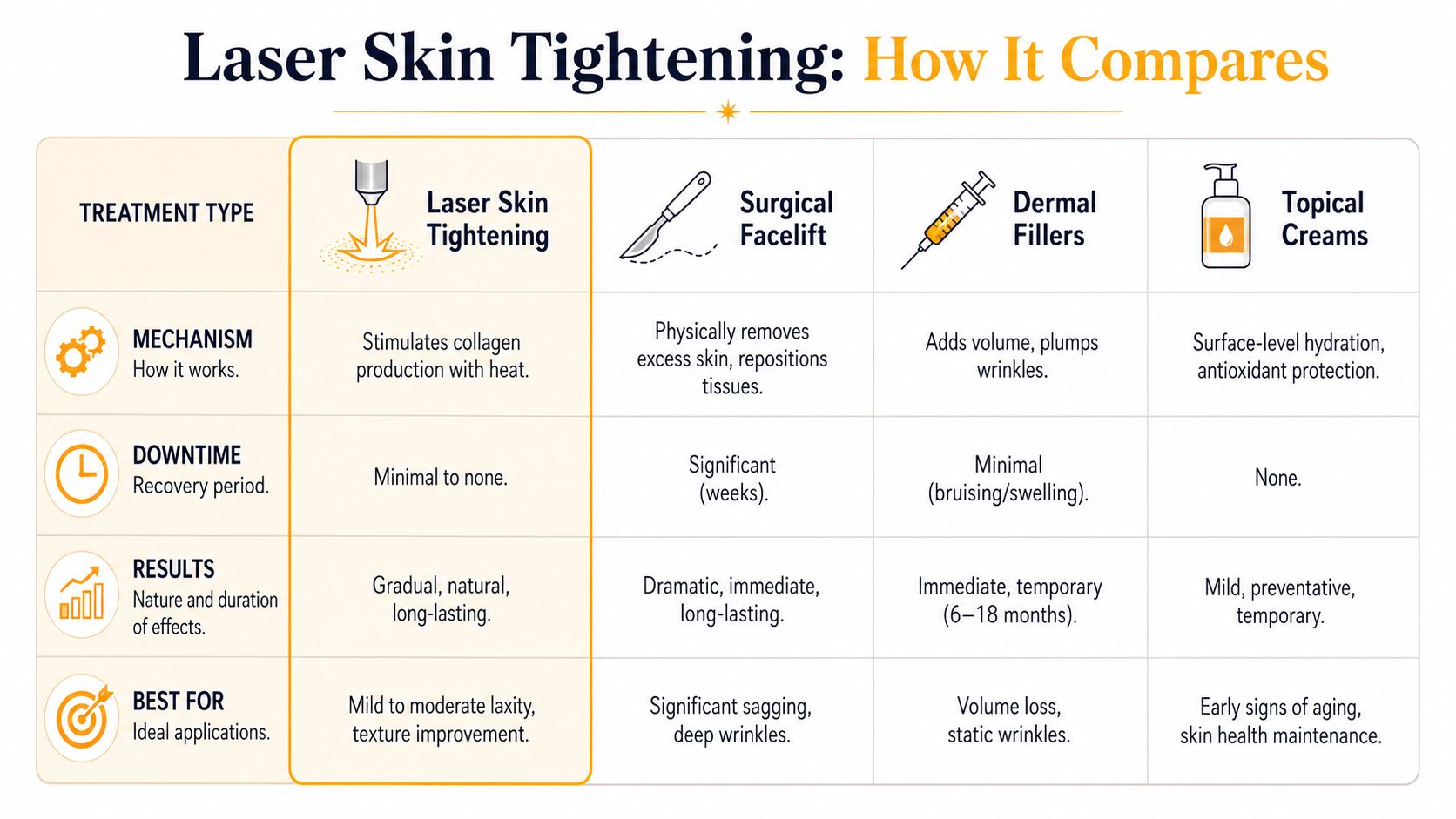
Laser treatment is best for patients with mild to moderate laxity who want improvement in skin firmness and quality without surgery. It works above the level of a cream or serum because it stimulates collagen remodeling within the skin. It does not lift descended facial structures, replace lost volume, or recreate the structural change a facelift can provide.
That distinction matters.
The right comparison is not laser versus everything else. The better question is what problem needs to be corrected.
| Treatment | Best For | Invasiveness | Downtime | Results Timeline |
|---|---|---|---|---|
| Laser skin tightening | Mild to moderate laxity and skin quality change | Minimally invasive | Minimal to mild | Gradual |
| RF microneedling | Texture, pores, mild laxity, acne scar patterns | Minimally invasive | Usually brief social downtime | Gradual |
| Ultrasound-based tightening | Mild lifting goals in selected areas | Non-surgical | Minimal | Gradual |
| Surgical facelift | Significant sagging and tissue descent | Surgical | Longer recovery | More immediate structural change |
Laser tightening often occupies the middle ground well. For the right patient, it improves firmness with limited disruption to daily life. The trade-off is that results build slowly, and a series is usually needed because collagen remodeling happens over time. Patients who expect a single appointment to create a surgical-level lift are usually disappointed.
RF microneedling can be a better choice when the treatment goal includes texture, enlarged pores, acne scarring, and mild laxity in the same area. Patients comparing these categories may find this overview of Morpheus8 skin improvement treatment helpful for understanding where microneedling-based collagen stimulation differs from laser-based care.
When another option may be the better fit
If the face looks tired because volume has been lost, filler may address the issue more directly than tightening alone. If the skin quality is reasonable but the cheeks, jawline, or neck have descended, surgery is often the more accurate recommendation. If the concern is early and preventive, consistent skin care and sun protection may be enough for now.
Supportive habits still matter. Patients often ask what they can do at home to support skin quality between treatments, and a practical guide to the best supplements for skin elasticity can be useful alongside discussions about protein intake, sun avoidance, and daily topical care. Supplements can support overall skin health, but they do not tighten loose skin on their own.
The strongest plans are problem-based. Sometimes laser is the right answer. Sometimes it is part of a combination approach. Sometimes the best advice is to skip laser entirely and choose the treatment that matches the anatomy.
The Chernoff Difference Expertise in Laser Rejuvenation
Technology matters, but judgment matters more. Two patients can present with the same complaint of “loose skin” and need very different plans. One may need resurfacing. Another may need collagen stimulation. A third may need a surgical lift because the issue is descent, not just skin quality.
Why provider judgment matters as much as the device
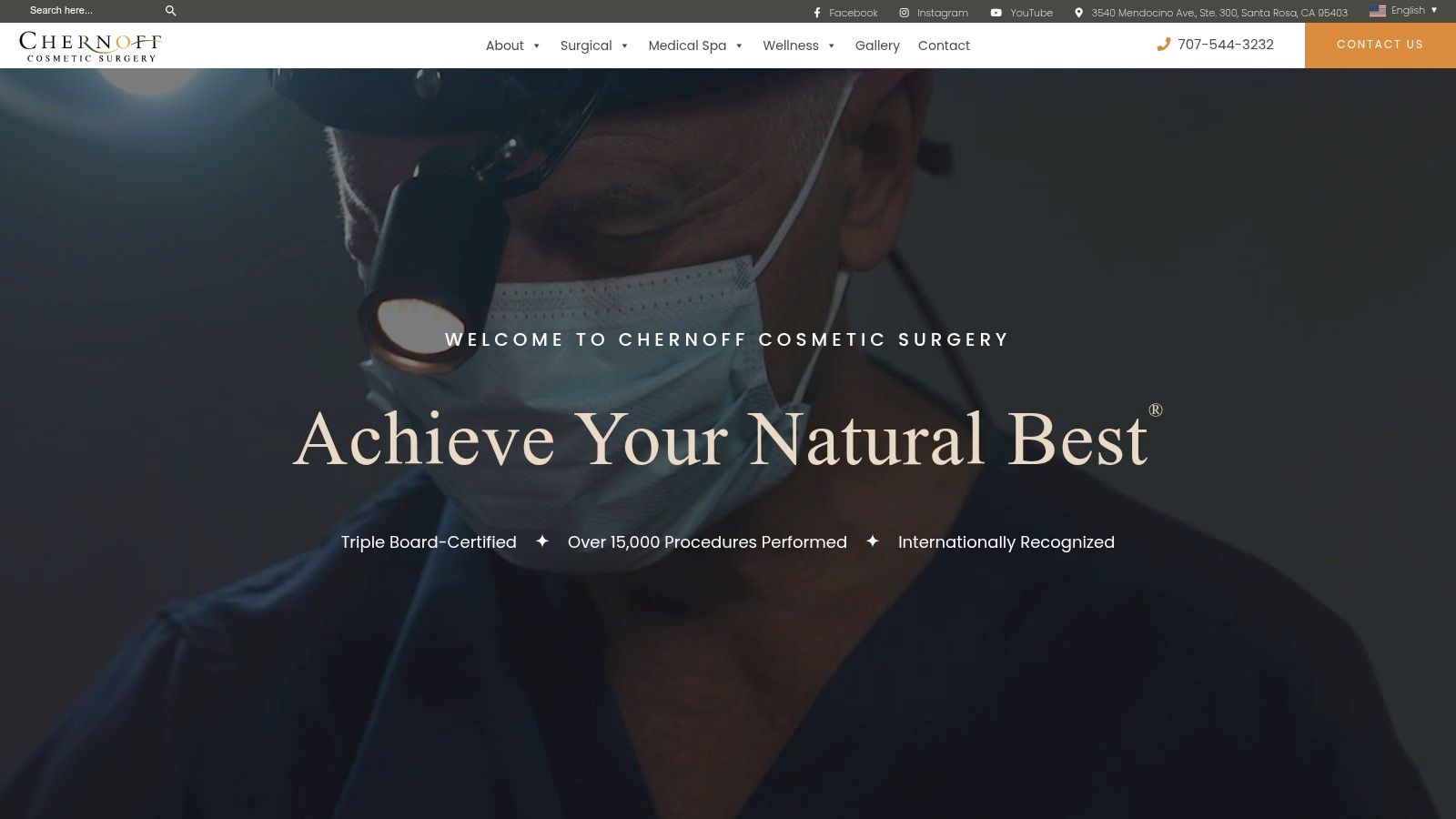
Dr. Greg Chernoff is triple board-certified and has more than 30 years of experience in facial and body procedures. In practical terms, that background matters because laser rejuvenation is rarely about operating a machine in isolation. It's about deciding whether a patient should have laser treatment at all, and if so, which intensity, which technology, and whether another modality should be part of the plan.
That broader perspective becomes especially important when a patient is hovering between non-surgical and surgical territory. The safest and most satisfying recommendation is often the one that avoids overselling what a device can do.
What careful treatment planning looks like
A thoughtful practice doesn't force every patient into the same approach. It evaluates skin quality, degree of laxity, pigmentation, wrinkle pattern, tolerance for downtime, and long-term goals. In some cases, that may include fractional laser resurfacing. In others, it may include radiofrequency-based tightening or a combined strategy. Chernoff Cosmetic Surgery also offers radiofrequency therapy as one option for skin tightening in selected patients.
Practices that grow sustainably usually do so by aligning education, trust, and realistic treatment planning. For readers interested in the business side of how medical aesthetics practices communicate those standards, Silver Spoon's med spa growth blueprint offers an interesting look at how patient education shapes a practice's reputation.
A good consultation should leave you with clarity, not pressure.
That's the standard patients should expect. When laser rejuvenation is recommended thoughtfully, with the right indication and the right timeline, it can be a strong option for improving firmness, texture, and overall skin quality without surgery.
If you're considering a skin tightening laser treatment and want an honest assessment of whether it's the right fit, schedule a consultation with Chernoff Cosmetic Surgery. The right plan starts with a careful evaluation of your skin, your anatomy, and the level of improvement you want.